
Key takeaways
- RTX 5060 vs RTX 5060 Ti comes down to VRAM first: 8GB against 16GB, on the same 128-bit bus.
- The Ti has 4,608 CUDA cores against the 5060's 3,840, which is about 20% more.
- Launch prices were $299 for the 5060 and $429 for the 16GB Ti, a $130 gap.
- The 5060 is fine at 1080p, while the Ti is the safer pick for 1440p ultra.
- Both cards need the same CPU, a modern six-core chip, so the choice is about the GPU only.
RTX 5060 vs RTX 5060 Ti: the short answer
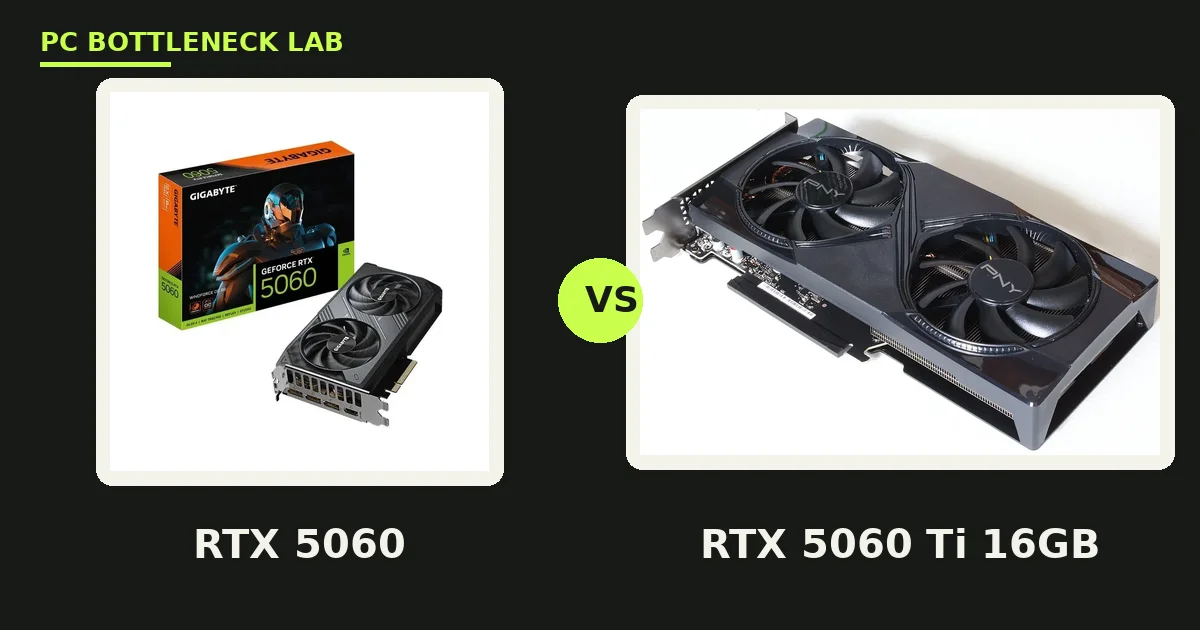
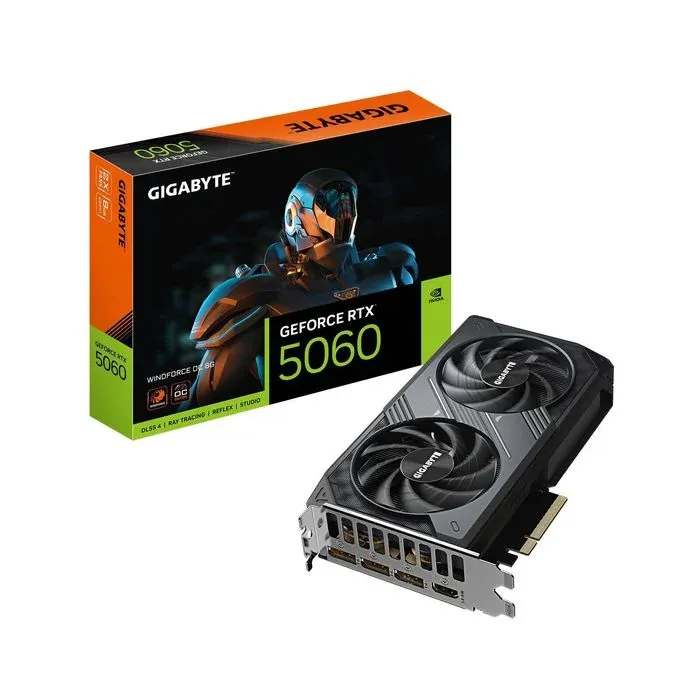
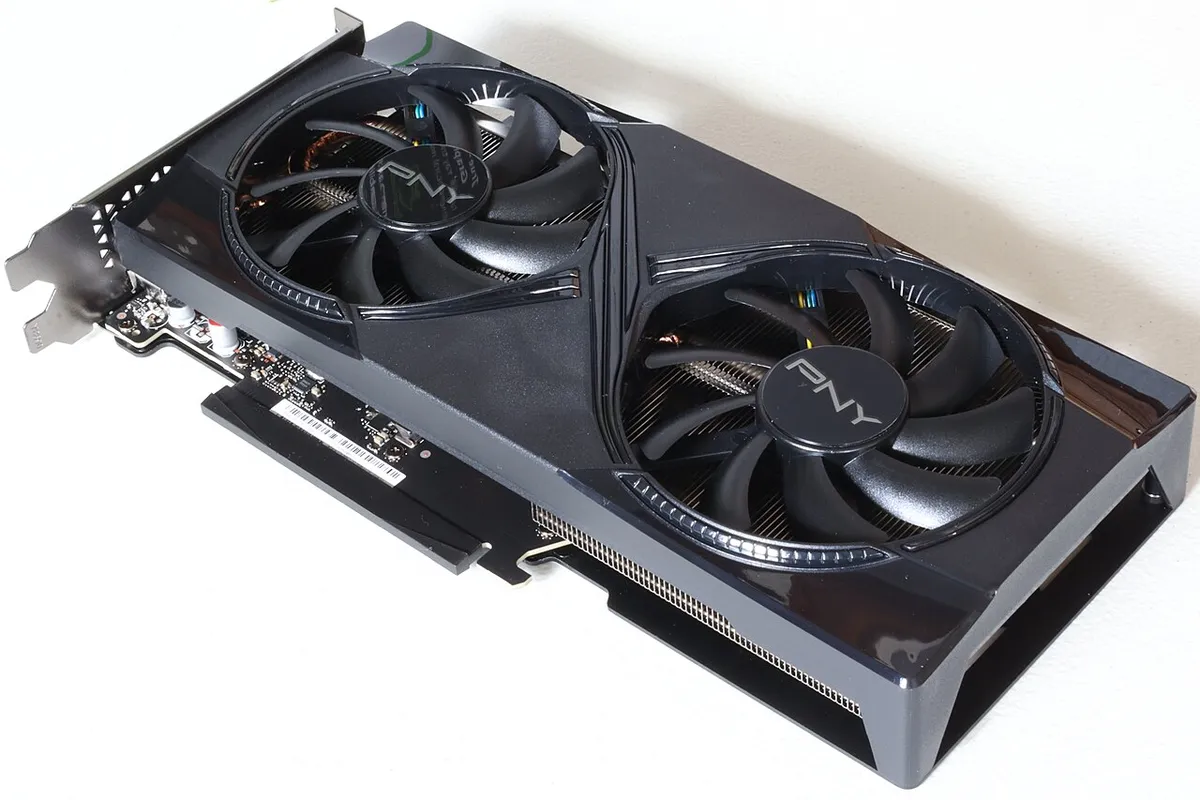
A bottleneck is a part that limits the rest of the system. The RTX 5060 and the RTX 5060 Ti are both Blackwell cards from 2025, and they share the same GB206 chip family. The 5060 launched on 19 May 2025 at $299, with 3,840 CUDA cores, 8GB of GDDR7 memory, and a 145W board power rating. The 5060 Ti launched on 16 April 2025 at $379 for 8GB and $429 for 16GB. It has 4,608 CUDA cores and a 180W board power rating. Both use a 128-bit memory bus at 448 GB/s, and both use a PCIe 5.0 x8 link. The Ti is the stronger card in every way that matters for gaming. The 5060 is still a good card, yet its 8GB of memory is the limit that ages fastest. Buy the Ti when you play at 1440p. Buy the 5060 only when your budget is strict and you play at 1080p.
RTX 5060 vs RTX 5060 Ti specs compared
The spec table tells most of the story. The Ti has more cores, more memory, and more power draw, while the 5060 is cheaper and cooler. Nothing else on the sheet differs: same architecture, same memory speed, same bus width, same PCIe link. That is why the comparison is so clean. You pay for cores and memory, and you get frames and headroom in return. The 5060 Ti 8GB sits between them, with the Ti chip and only 8GB of memory. This guide compares the 16GB Ti, since that is the version worth buying in 2026.
| Spec | RTX 5060 | RTX 5060 Ti 16GB |
|---|---|---|
| GPU chip | Blackwell GB206 | Blackwell GB206 |
| CUDA cores | 3,840 | 4,608 |
| Memory | 8GB GDDR7 | 16GB GDDR7 |
| Memory bus | 128-bit | 128-bit |
| Memory speed | 448 GB/s | 448 GB/s |
| Board power | 145W | 180W |
| PCIe link | PCIe 5.0 x8 | PCIe 5.0 x8 |
| Launch price | $299 | $429 |
| Launch date | 19 May 2025 | 16 April 2025 |
Bottleneck: which card hits its limit first
The 5060 hits its limit first, and the limit is VRAM. At 1080p, both cards run well, since 8GB is enough for most games at that resolution. At 1440p high settings, the 5060 still copes, yet texture-heavy games start to push past 8GB. At 1440p ultra, the 5060 stutters in games like Alan Wake 2, Cyberpunk 2077 with path tracing, Hogwarts Legacy, and Indiana Jones. Those titles push past 8GB at high settings. The Ti keeps going, since 16GB holds the textures. The CPU limit is the same for both cards: a modern six-core chip feeds either one at 1080p and 1440p. A four-core chip from before 2020 holds both cards back at 1080p. So the bottleneck that separates them is VRAM, not the CPU. Read the full VRAM picture here: VRAM bottleneck: 8GB vs 12GB vs 16GB. And read how resolution shifts the balance here: how resolution changes bottlenecks.
VRAM: 8GB against 16GB in 2026
VRAM is the memory on the graphics card that holds textures, shadows, and frame data. When VRAM fills up, the card swaps data with system RAM, and the game stutters. In 2026, 8GB is enough for 1080p and for esports titles at any resolution. It is not enough for 1440p ultra in texture-heavy games, and it is not enough for path tracing. About a third of new AAA games push past 8GB at 1440p high settings, per one 2026 guide's count. That share will only grow, since new games ship with bigger textures each year. The 16GB Ti has room for those textures, so it ages better. The 8GB 5060 will need lower texture settings sooner, which is the real cost of saving money now. If you keep a card for three or four years, 16GB is the safer buy.
| Setting | RTX 5060 8GB | RTX 5060 Ti 16GB |
|---|---|---|
| 1080p esports | Smooth | Smooth |
| 1080p AAA high | Smooth | Smooth |
| 1440p high | Mostly smooth | Smooth |
| 1440p ultra, heavy textures | Stutters in some games | Smooth |
| 1440p with path tracing | Struggles | Smooth with DLSS |
| 4K | Not recommended | Entry-level only |
Value: what the price gap buys in November 2026
Launch prices were $299 for the 5060 and $429 for the 16GB Ti, a $130 gap. Street prices in November 2026 run well above launch for both cards. TechSpot's September 2026 pricing data placed typical US RTX 5060 pricing around $450. Tom's Hardware's survey of Newegg listings on 10 August 2026 put the median RTX 5060 Ti 16GB at $804.99, up from $569.99 in June 2026. Best Buy listed the PNY RTX 5060 Ti 16GB at $769.99 on 6 November 2026, and the 8GB version at $499.99. So the real gap in November 2026 is far wider than the $130 launch gap, and it changes the value math. At launch prices, the Ti is the clear winner. At street prices, check the live gap before you buy. When the Ti costs nearly twice the 5060, the 5060 wins on value for 1080p play. When the gap is small, the Ti wins. Do not pay a flagship price for either card, since both are budget cards at heart. For used-card value, see this: used GPUs in 2026: balanced or trap.
Which card for which player
Buy the RTX 5060 when you play at 1080p, your budget is strict, and you upgrade every two or three years. It runs esports titles at high refresh, and it runs AAA games at 1080p high settings. Buy the RTX 5060 Ti 16GB when you play at 1440p, you keep cards for years, or you play texture-heavy games. It is also the better pick when you stream, since the extra VRAM headroom helps. Buy neither card when you play at 4K, since both are too weak for that resolution. Step up to the RTX 5070 instead, and compare it with its bigger sibling here: RTX 5070 Ti vs RTX 5070. Check your own pair before you buy with the free tool: bottleneck calculator. For the CPU side of the 5060, see the older 4060 list, since the logic matches: best CPU for RTX 4060. And check the power supply you need here: what PSU do you need for an RTX 5070.
The bottom line on RTX 5060 vs RTX 5060 Ti
RTX 5060 vs RTX 5060 Ti ends with the Ti ahead for most buyers in 2026. The 16GB Ti costs more, yet it removes the VRAM limit that will age the 8GB 5060 first. Buy the 5060 only when your budget is strict and you play at 1080p. Buy the Ti when you play at 1440p or keep cards for years. Check your pair on the GPU bottleneck calculator before you buy.
Frequently asked questions
Is the RTX 5060 Ti 16GB worth it over the RTX 5060?
Yes, for most buyers it is worth it. The Ti has about 20% more CUDA cores and twice the VRAM, so it holds up at 1440p where the 8GB 5060 stutters. At launch prices the gap was only $130, which made the Ti an easy pick. At November 2026 street prices the gap is wider, so check the live gap before you buy.
Can the RTX 5060 run 1440p gaming?
Yes, it can run 1440p in most games at high settings. It struggles only at 1440p ultra in texture-heavy games, where 8GB of VRAM runs out. For 1440p play, the 16GB Ti is the safer pick, since it holds textures without stutter. If you already own a 5060, lower texture settings one step before you blame the card.
Does the RTX 5060 Ti need a better CPU than the RTX 5060?
No, both cards need the same CPU. A modern six-core chip feeds either card at 1080p and 1440p. The Ti pushes more frames, so a weak CPU shows up slightly sooner with the Ti at 1080p. Still, the CPU floor is the same for both, and the gap between them is a GPU and VRAM gap, not a CPU gap.
Is 8GB VRAM enough in 2026?
It is enough at 1080p and for esports titles, yet it is tight at 1440p ultra. About a third of new AAA games push past 8GB at 1440p high settings, per one 2026 guide's count. Path tracing and heavy textures need more. If you keep a card for years or play at 1440p, 16GB is the safer buy in 2026.
What PSU do I need for the RTX 5060 Ti?
NVIDIA guides a 600W PSU for the 5060 Ti, and a 550W PSU for the 5060. A quality 650W unit covers either card with room for a mid-range CPU. Check your PSU age too, since an old unit can cause crashes that look like a bottleneck. The Ti draws 180W, against 145W for the 5060, so the gap is small.
Should I buy the 5060 Ti 8GB instead of the 16GB version?
No, buy the 16GB version when you can. Both use the same chip and clocks, so the only difference is memory size. The 8GB Ti stutters at 1440p ultra in the same games as the 5060, while the 16GB Ti does not. The 8GB Ti makes sense only when it costs little more than the 5060 and you play at 1080p.
How this guide was prepared
This guide uses NVIDIA launch specifications and launch prices for both cards, plus dated reported street prices from TechSpot, Tom's Hardware, and Best Buy readings. Prices are reported readings with dates, never our own measurements.
Last updated: November 10, 2026