
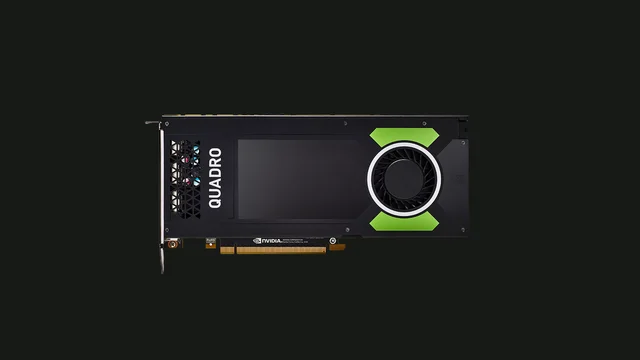
Quadro P4000 overview
Quadro P4000 is a Pascal-based desktop graphics card with 1,792 shader cores and 8.0 GB of GDDR5 memory. Its estimated gaming pace makes Entry-level 1080p its most sensible target.
CPU choice matters most at 1080p. At higher resolutions, the graphics workload increasingly becomes the system pace-setter.
PC bottleneck calculator takeaway: Use the pairing table as a starting point, then test your exact CPU, GPU and resolution in our calculator.
Data profile: component specifications and calculator model Editorial scope: desktop GPU raster gaming and pairing estimates Planning estimates, not a measured single-game benchmark
Specifications
Quadro P4000 resolution scaling and graphics limits
The Quadro P4000 uses the Pascal architecture with 8 GB of GDDR5 memory. Its calculator profile is 50 FPS at 1080p, 30 FPS at 1440p and 16 FPS at 4K, making lighter 1080p its clearest planning target. These are normalized model estimates rather than results copied from a single benchmark run.
Moving from 1080p to 1440p retains approximately 60% of the estimated pace; 4K retains 32%. Those two ratios describe this card more usefully than a generic resolution label because they show how quickly pixel load consumes its available performance.
The model produces a planning ratio of about 0.48 estimated 1080p FPS per watt from a 105-watt board-power rating. This is not a laboratory efficiency measurement.
Memory path and platform fit
The memory system combines a 256-bit bus with about 243 GB/s of bandwidth. The capacity is practical for mainstream textures, but demanding packs may need adjustment. The listed interface is PCIe 3.0 x16, so an older platform should be checked for lane configuration as well as physical clearance and power connectors.
Reading the hardware profile
Released in 2017, this configuration lists 1792 shader cores, a boost clock near 1480 MHz and 0 dedicated ray-tracing cores. Its estimated pace calls for selective settings, lighter games or an acceptance of sub-60 FPS performance in demanding workloads. The public data profile records a gaming score of 67 and rank 114; those ordering values are kept separate from the FPS curve used by the calculator.
The 60% 1440p retention figure is especially useful when comparing it with another card from a different generation. A card with a similar 1080p estimate can behave differently at higher resolutions because memory bandwidth, cache design and driver behaviour do not scale equally. Ray tracing, upscaling and frame generation are excluded from this native-raster curve and should be evaluated as separate workload choices.
What should trigger an upgrade
The lower board-power class suits compact or efficiency-oriented systems. Consider a faster card when this GPU remains near maximum utilisation and misses the display target after sensible settings changes. If utilisation is low while frame rate stalls, investigate the CPU, memory configuration, thermal limits and frame caps before replacing the graphics card. This keeps the Quadro P4000 recommendation tied to observed system behaviour rather than treating a modelled percentage as a universal upgrade instruction.
Performance by resolution
Highest CPU sensitivity and the best place to detect a processor ceiling.
More GPU work per frame reduces CPU pressure and improves pairing flexibility.
Usually GPU-limited; tune image quality or use upscaling when needed.
Compatible processors for Quadro P4000
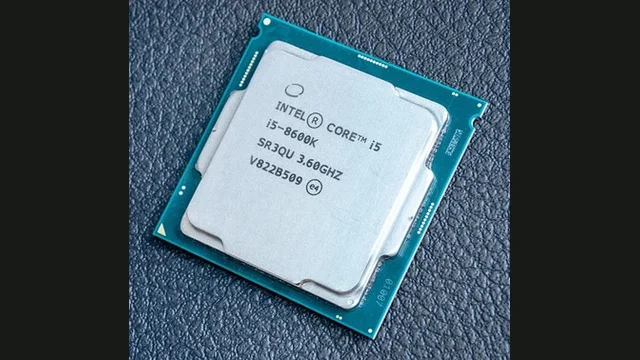
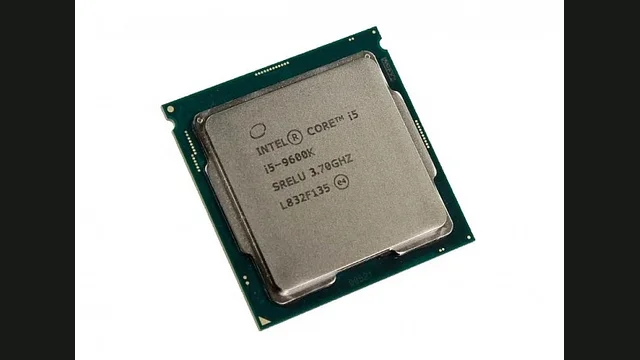
Popular CPU pairing results
Resolution-aware estimates from the Bottleneck Lab model.
Estimates describe representative gaming pace. Game engine, settings, memory, thermals and background tasks can change real results.
How to diagnose and fix a bottleneck
Signs the CPU is limiting
- GPU usage remains below maximum during uncapped gameplay.
- Lower settings barely improve FPS.
- Frame-time spikes appear in busy scenes.
What to try first
- Check temperatures, memory configuration and background tasks.
- Test a higher resolution or more GPU-heavy settings.
- Upgrade only after monitoring confirms a repeatable CPU ceiling.
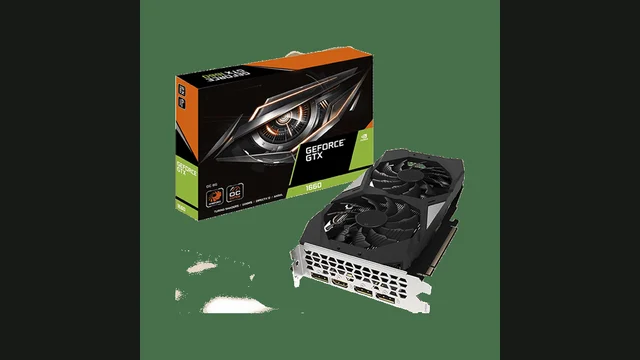
Similar GPUs to compare
Quadro P4000 FAQs
What CPU is enough for Quadro P4000?+
A processor near the balanced rows above is sufficient for typical gaming. Faster CPUs mainly help high-refresh 1080p and unusually CPU-heavy titles.
Is Quadro P4000 better for 1080p or 1440p?+
Based on its estimated pace, Entry-level 1080p is the clearest overall fit, although settings and target refresh rate still matter.
How accurate is a PC bottleneck calculator?+
It is a planning estimate, not a universal benchmark. Confirm the result with GPU utilisation, frame times and game-specific testing.
Is 8.0 GB of VRAM enough for Quadro P4000?+
Capacity should be judged against resolution, texture quality and ray tracing. Reduce textures first if monitoring shows memory pressure, asset swapping or uneven frame times.
Does Quadro P4000 need a specific PCI Express version?+
The listed interface is PCIe 3.0 x16. It remains backward compatible, although an older platform can reduce bandwidth in some memory-sensitive games or on cards using fewer lanes.
When is a graphics card upgrade better than a CPU upgrade?+
Choose the graphics upgrade when Quadro P4000 stays near full utilisation and misses your frame-rate target. A CPU upgrade matters more when GPU use remains low during uncapped gameplay.
Will Intel Core i5-8600K bottleneck the Quadro P4000?+
In the Bottleneck Lab model, the Quadro P4000 with the Intel Core i5-8600K is balanced with no meaningful bottleneck at 1080p, GPU-limited by about 5.3% at 1440p and GPU-limited by about 31% at 4K. Treat this as a planning estimate and confirm it with GPU utilisation and frame times in your own games.
Will Intel Core i5-9600K bottleneck the Quadro P4000?+
In the Bottleneck Lab model, the Quadro P4000 with the Intel Core i5-9600K is balanced with no meaningful bottleneck at 1080p, GPU-limited by about 8.4% at 1440p and GPU-limited by about 33.3% at 4K. Treat this as a planning estimate and confirm it with GPU utilisation and frame times in your own games.