
Key takeaways
- RTX Spark laptops went on sale on 16 October 2026, from $2,599, from makers such as ASUS, Dell, HP, Lenovo, Microsoft and MSI.
- One chip holds a 20-core Arm CPU, a Blackwell GPU with 6,144 CUDA cores, and up to 128GB of shared LPDDR5X memory.
- NVIDIA named 14 online games ready on day one, including Fortnite, Counter-Strike 2, ARC Raiders and Marvel Rivals.
- Anti-cheat is the real gate: Call of Duty, Battlefield and PUBG waited on support into 2027.
- Unified memory ends VRAM limits but shares bandwidth near 300 GB/s, so the GPU itself sets the speed ceiling.
What RTX Spark actually is
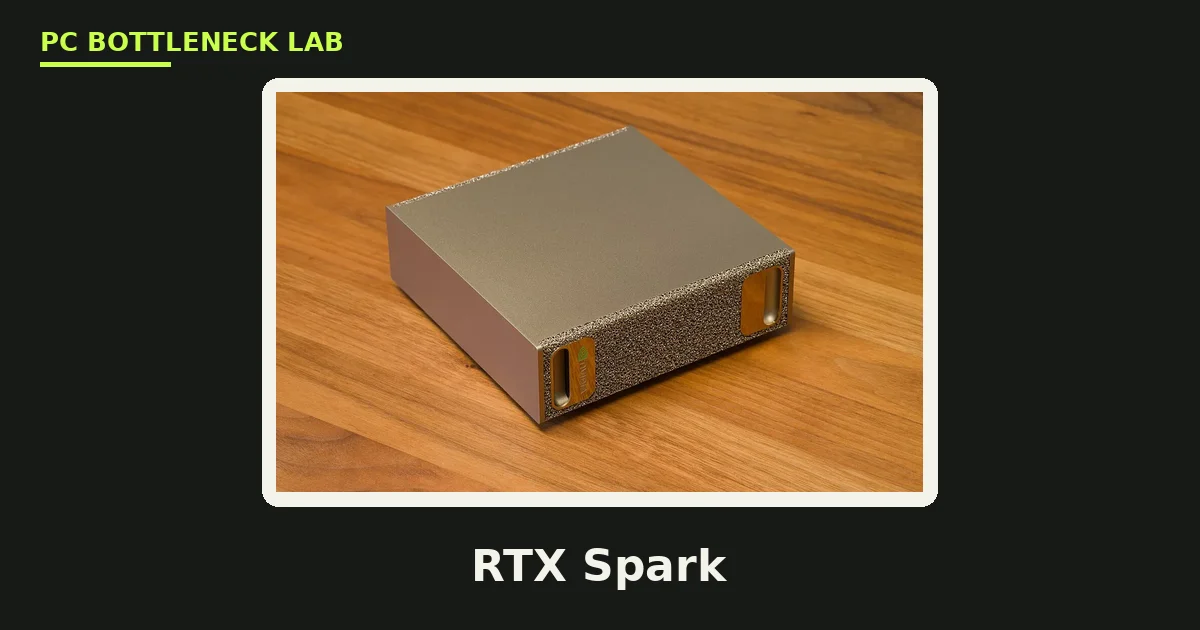
RTX Spark is NVIDIA's first ARM PC platform for Windows. ARM is a processor design used in phones and tablets, built for low power use. Most Windows games were written for x86 processors from Intel and AMD, so an ARM PC must translate those games to run them. RTX Spark is built around the N1X superchip, which puts a Grace Arm CPU and a Blackwell graphics processor on one piece of silicon.
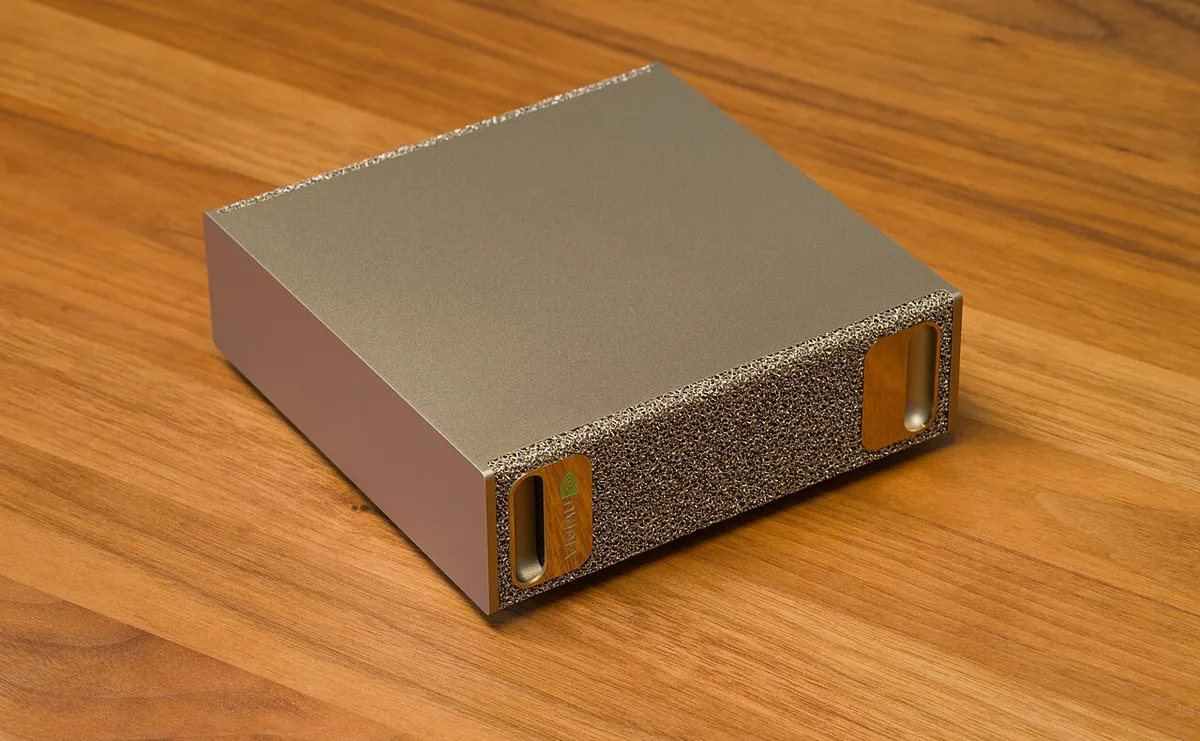
The headline numbers are easy to state. The CPU has 20 Arm cores. The GPU has 6,144 CUDA cores, which are the small parallel units that draw game frames. Memory runs to 128GB of LPDDR5X in the top setup, with smaller 32GB, 48GB and 64GB options. The laptops run Windows 11 on Arm and carry Copilot+ certification. DLSS, Reflex, G-SYNC and ray tracing are supported on the platform, and DLSS 5 arrived at launch. Our guide to DLSS 4 multi-frame generation and the CPU bottleneck explains how frame generation shifts the load between CPU and GPU.
A note on the name helps avoid confusion. NVIDIA also sells DGX Spark, a small desktop AI system on the same chip family. This guide covers the RTX Spark laptops and desktops sold as Windows PCs, not the DGX developer box. The bottleneck story is the same chip, but the buyer and the software are different.
Unified memory: the wall that moved
A normal gaming laptop splits memory in two. System RAM feeds the CPU, and video memory (VRAM) feeds the GPU. A card with 8GB of VRAM cannot load a scene that needs 10GB, even if the PC has 32GB of system RAM sitting free. That hard wall causes stutter and texture pop-in. RTX Spark removes the wall by sharing one pool of memory between the CPU and GPU.
Unified memory is one pool of fast memory that the CPU and GPU both use. The GPU can take most of the 128GB when a task needs it. That matters most for local AI work, where a large model must fit in memory or it slows to a crawl. One reported review result shows the point. An ASUS ProArt P16 with 128GB of unified memory finished a 120-billion-parameter local AI workload in about 33 minutes. The same task took about 53 minutes on an RTX 5090 desktop, whose model spilled over the PCIe link. That is a single reported review, not our test, but it shows why AI buyers love this design.
For games, the same design cuts both ways. You will not run out of video memory, because the pool is huge. But the pool is shared, so the CPU and GPU compete for the same bandwidth. Reported unified memory bandwidth sits near 273 to 300 GB/s. That is plenty for the GPU class in this chip, yet it is far below a desktop RTX 5090. So the GPU itself becomes the speed limit, not the memory size. Buying the 128GB model does not make games faster than the 64GB model in most titles.
| Memory setup | What it changes | Who gains |
|---|---|---|
| 32GB unified | Enough for games and normal apps | Buyers who only game and browse |
| 64GB unified | Room for large scenes and some AI work | Creators who also game |
| 128GB unified | Huge models fit in memory at once | Local AI users, not gamers |
RTX Spark bottleneck: emulation and the games that run
Prism is Microsoft's tool that translates x86 Windows apps to run on Arm. It sits between the game and the processor, and it converts CPU work on the fly. GPU work does not need the same translation, because the graphics chip draws frames as usual. That split is good news: the heavy drawing work runs natively, while only the CPU work pays a translation cost.
Most single-player games run through Prism without drama. NVIDIA said hundreds of games were playable at launch. A technical briefing in early November 2026 named 97 popular titles running well, either natively or through Prism. But "runs" is not the same as "runs fast". Translation adds latency to CPU work, and CPU-heavy scenes such as crowded towns or large battles feel it most. Frame rates also vary by title, so treat any single FPS claim from one site as a rough guide, not a promise.
Native ARM games avoid the cost entirely. Fortnite runs as a native ARM64 client from Epic, and Marvel Rivals was shown running natively on Arm with anti-cheat prepared for the platform. More native clients will arrive over time, and each one removes a layer of translation. Until then, Prism is the bridge, and the bridge is narrower for CPU-bound games than for GPU-bound ones.
Anti-cheat is the real gate
Anti-cheat software guards online games against cheating, and it runs deep inside Windows at kernel level. That depth is the problem. Prism can translate ordinary game code, but it cannot simply translate a kernel driver that was written for x86. Each anti-cheat system needs its own Arm version, built with the game maker. Until that version exists, the game will not start, no matter how fast the chip is.
NVIDIA named 14 online games ready on day one with anti-cheat working. The list includes ARC Raiders, Arknights: Endfield, Counter-Strike 2, Dota 2, Fortnite and Marvel Rivals. It also names NARAKA: BLADEPOINT, Rocket League, RUST, THE FINALS, War Thunder, World of Tanks, World of Warships and Wuthering Waves. NVIDIA also named single-player launch titles such as Cyberpunk 2077, Gears of War: E-Day, World of Warcraft and NBA 2K27.
The waiting list is just as important. Call of Duty and Battlefield 6 were not compatible at launch, according to Notebookcheck testing reported in November 2026. EA games using Javelin anti-cheat, such as FC 27, wait for support expected in early 2027. PUBG: Battlegrounds is targeted for the first half of 2027. League of Legends and Valorant also wait on Riot's Vanguard anti-cheat, which needs an Arm version before either game can launch. If your main game is on the waiting list, this PC is not for you yet.
| Game group | Status at launch | What to do |
|---|---|---|
| Fortnite, CS2, ARC Raiders, Marvel Rivals, Dota 2 | Ready with anti-cheat | Safe to buy for these games |
| Cyberpunk 2077, World of Warcraft, NBA 2K27 | Playable through Prism or natively | Check settings per title |
| Call of Duty, Battlefield 6, F1 25 | Not compatible at launch | Do not buy yet for these games |
| EA Javelin games, PUBG, League of Legends, Valorant | Support expected in 2027 | Wait for the anti-cheat update |
Who should buy an RTX Spark gaming PC?
Buy one if your games are on the ready list and you also want a thin laptop for AI work or creation. The unified memory is a genuine advantage for local AI models, large 3D scenes and heavy multitasking. The laptops are thin creator machines, not thick gaming laptops with huge cooling. They suit a desk and a bag better than a long gaming session at full load.
Do not buy one if your main game is Call of Duty, Battlefield, PUBG, League of Legends or Valorant. No price cut fixes a game that will not launch. Do not buy one as a pure gaming laptop either. At $2,599 and up, a normal x86 gaming laptop with a discrete GPU gives you more game support. It also gives you more raw graphics power for the same money. Our guide to laptop bottlenecks explains how power limits shape laptop gaming. RTX Spark follows the same rule: thin machines trade sustained speed for size.
Before you buy, run this check. List your five most-played games. Search each one with "RTX Spark" or "Windows on Arm" to confirm its status today. Then check the memory size: 32GB suits gaming alone, while 64GB or 128GB only pays off for AI or creation work. If any game on your list is unconfirmed, wait. Compatibility improves monthly, and the price of waiting is nothing next to the price of a laptop that cannot run your main game. For a normal x86 build, check the balance on the bottleneck calculator before you spend.
How RTX Spark compares with a normal gaming laptop
A normal gaming laptop pairs an x86 CPU with a separate GPU and its own VRAM. Every game runs without translation, and every anti-cheat system works as written. The cost is the VRAM wall: an 8GB card stutters in texture-heavy titles at 1440p, and you cannot borrow system RAM to fix it. Our guide to VRAM limits at 8GB, 12GB and 16GB explains where that wall bites.
RTX Spark flips the trade. It removes the VRAM wall and adds translation and anti-cheat risk. It also adds AI strength that a normal gaming laptop cannot match at the same size. A 128GB unified pool holds models that would never fit in 8GB or 12GB of VRAM. That is why the first buyers are creators and AI users who also game, not pure gamers. The same logic sits behind our explainer on AI PCs and NPUs as a new bottleneck. New hardware moves the limit, it does not erase it.
For cloud play, the picture differs again. A cloud service runs the game on a remote x86 PC, so Arm compatibility never enters the question. Our comparison of cloud gaming vs local hardware covers that trade-off. But cloud play needs fast, stable internet, and it never matches local play for latency.
The bottom line on the RTX Spark bottleneck
The RTX Spark bottleneck is compatibility, not memory size. Unified memory solves the VRAM problem and hands the speed limit back to the GPU. Prism emulation handles most games, yet CPU-heavy scenes pay a translation cost. Anti-cheat decides the rest, and the biggest shooters waited into 2027. Buy an RTX Spark PC for AI work and the games on the ready list, and buy a normal x86 gaming laptop for anything else. Check your games first, because no spec sheet can answer that question for you. If you buy a normal gaming laptop instead, run the CPU GPU bottleneck calculator first to compare your options.
Frequently asked questions
Can RTX Spark run PC games?
Yes, many games run on RTX Spark, either natively or through Microsoft's Prism emulation. NVIDIA named 14 online games ready on day one, including Fortnite, Counter-Strike 2 and ARC Raiders, plus hundreds of titles overall. But some games do not run yet, so check your exact games before buying.
What is the RTX Spark bottleneck?
The main limit is compatibility, not memory size. Unified memory removes the VRAM wall, yet Prism emulation adds cost to CPU work, and anti-cheat systems need Arm versions before their games can launch. The GPU itself also sets the speed ceiling, since it is a laptop-class chip.
Does Call of Duty work on RTX Spark?
No, Call of Duty did not work on RTX Spark at launch, because its RICOCHET anti-cheat had no Arm version. NVIDIA said support would arrive in 2027 as anti-cheat support lands. Do not buy an RTX Spark PC for Call of Duty until that support is confirmed live.
Is 128GB of unified memory better for gaming than 32GB?
Not for most games. The GPU can already use the memory it needs at 32GB, and extra memory does not make the GPU faster. The 128GB option pays off for local AI models and huge 3D scenes, where the whole model must fit in memory at once.
What is Prism emulation on Windows on Arm?
Prism is Microsoft's tool that translates x86 and x64 Windows apps to run on Arm processors. It converts CPU work on the fly, while GPU drawing runs as usual. Most games run through it, but CPU-heavy scenes can lose speed, and kernel-level anti-cheat drivers cannot be translated this way.
Is RTX Spark good for AI work?
Yes, local AI is its strongest use. Up to 128GB of unified memory holds large models that would spill over the PCIe link on a normal desktop GPU. One reported review found a 128GB RTX Spark laptop finishing a large local AI workload faster than an RTX 5090 desktop for exactly that reason.
Should I buy an RTX Spark laptop or a normal gaming laptop?
Buy a normal x86 gaming laptop if gaming is your main use, because every game and anti-cheat system works without translation. Buy RTX Spark if you also run local AI or creation work and your games are on the ready list. At $2,599 and up, pure gamers get more for their money elsewhere.
How this guide was prepared
We checked NVIDIA's launch reporting from October 2026 and Microsoft's Windows on Arm pages. We also checked several November 2026 reports on game support and anti-cheat status. Game lists are NVIDIA's claims as reported, and waiting-list dates are the makers' stated targets, not promises. Where sources differ on a single FPS figure, we left the number out.
Last updated: November 10, 2026