

Key takeaways
- The 270K Plus launched 23 March 2026 at 299 dollars, with 24 cores.
- It takes the 24-core layout of the Core Ultra 9 285K, so it matches the flagship core count at a lower price.
- At 1080p with an RTX 5090, the Ryzen 7 9800X3D leads by 8 to 25 percent in Club386 testing.
- At 1440p and 4K, the gap mostly disappears, since the graphics card becomes the limit in most games.
- In multi-threaded work, the 24 cores pull far ahead of the 8-core 9800X3D.
Core Ultra 7 270K Plus bottleneck: the short answer
The Core Ultra 7 270K Plus is a fast all-round CPU. It rarely limits a graphics card at 1440p or 4K, but it is not the fastest gaming chip. It trails the Ryzen 7 9800X3D in CPU-bound games at 1080p, and it beats that chip clearly in rendering, editing, and compiling. So the bottleneck answer depends on your resolution and workload. If you play at 1440p with a mid-range card, the GPU is the limit, and the 270K Plus is plenty. If you chase high refresh rates at 1080p, the X3D chip is still the better pick. Check your exact pair first with our free PC bottleneck calculator.
| Spec | Core Ultra 7 270K Plus | Core Ultra 7 265K | Core Ultra 9 285K |
|---|---|---|---|
| Cores / threads | 24 / 24 (8P + 16E) | 20 / 20 (8P + 12E) | 24 / 24 (8P + 16E) |
| Maximum turbo | 5.5 GHz | 5.5 GHz | 5.7 GHz |
| P-core / E-core boost | 5.4 / 4.7 GHz | 5.2 / 4.6 GHz | 5.7 / 4.6 GHz |
| L3 / L2 cache | 36 MB / 40 MB | 30 MB / 36 MB | 36 MB / 40 MB |
| Memory support | DDR5-7200 | DDR5-6400 | DDR5-6400 |
| Base / max turbo power | 125 W / 250 W | 125 W / 250 W | 125 W / 250 W |
| Launch price | 299 dollars | 309 dollars | 589 dollars |
What changed in Arrow Lake Refresh
Arrow Lake Refresh, sold as Core Ultra 200S Plus, is a mid-cycle update of the same architecture, not a new generation. Intel launched only two desktop chips in the refresh: the Core Ultra 7 270K Plus and the Core Ultra 5 250K Plus. The 270K Plus replaces the 265K, and it takes the full 24-core layout that used to belong to the 285K alone. That means 8 Lion Cove P-cores and 16 Skymont E-cores, where the 265K had only 12 E-cores. Intel also raised the die-to-die clock by 900 MHz, from 2.1 to 3.0 GHz. The NGU uncore clock rose by 400 MHz, from 2.6 to 3.0 GHz; those two clocks move data between the tiles inside the chip. Official memory support rose from DDR5-6400 to DDR5-7200 as well; intel also added a Binary Optimization Tool. It is a software layer that maps game code better onto the chip; reviewers tested without it to show raw hardware speed. Our guide to the first-wave chips covers the base they build on: Core Ultra 200 series bottleneck guide.
Gaming vs the 9800X3D: where it loses
The 9800X3D is still the gaming king, and the gap is widest where the CPU sets the pace. Club386 paired both chips with an RTX 5090 at 1080p High, and measured the 9800X3D 8 to 25 percent ahead across its game suite. In Cyberpunk 2077, the AMD chip scored 195 to 243 FPS against 177 to 217 FPS for the Intel chip. Tom's Hardware testing tells a similar story: its 17-game suite at 1080p with an RTX 5090 found the 270K Plus about 20 percent slower. PC Gamer reached the same verdict; it calls the 270K Plus the best chip Intel offers for gaming. It still cannot knock the 9800X3D off the top slot; the cause is cache. The 9800X3D carries 96 MB of L3 against 36 MB on the Intel chip, and cache-heavy games reward that gap. At 4K, the two are effectively tied, since the graphics card does the heavy work. Our head-to-head of the two X3D generations explains the cache effect: 9800X3D vs 7800X3D.
Which GPU pairs fit the 270K Plus
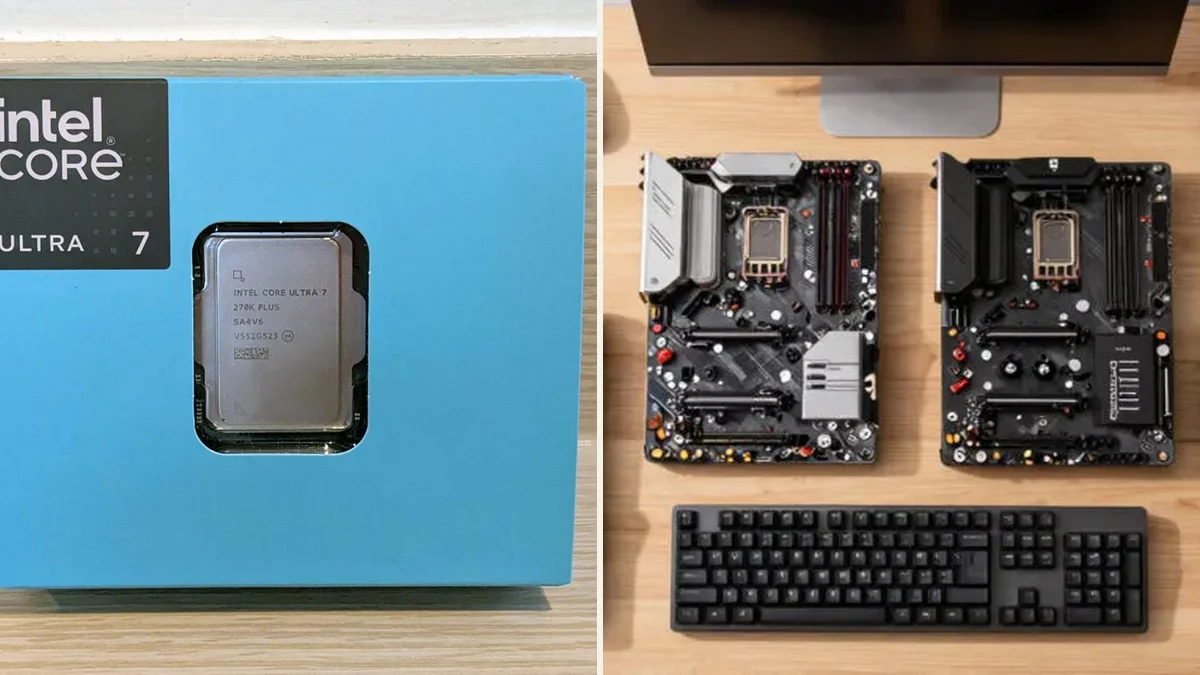
The 270K Plus feeds every current GPU without strain at 1440p and 4K, and the pairing table below sorts the matches by use. A mid-range card is the sweet spot for value; a flagship card still works. The CPU gives up frames to the 9800X3D at 1080p, so only buy that pair if you also render or stream. The one pairing rule that never changes is resolution. A 1080p high-refresh build is the only case where the CPU pick shapes the result. Our 9800X3D frame-rate guide by resolution shows the same pattern: Ryzen 7 9800X3D with RTX 5070: FPS by resolution. For the flagship pairing in full, see our best-CPU guide for the top cards: best CPU for RTX 5070 Ti and 5080.
| GPU pair | 1080p verdict | 1440p verdict | 4K verdict |
|---|---|---|---|
| RTX 5060 / RX 9060 XT | Balanced, GPU-limited | Balanced, GPU-limited | GPU-limited, card too weak |
| RTX 5070 / RX 9070 | CPU trails X3D slightly | Balanced, GPU-limited | Balanced, GPU-limited |
| RTX 5070 Ti / RX 9070 XT | CPU trails X3D clearly | Balanced, GPU-limited | Balanced, GPU-limited |
| RTX 5080 | CPU trails X3D clearly | Mostly GPU-limited | Balanced, GPU-limited |
| RTX 5090 | CPU trails X3D by up to 25% | Mostly GPU-limited | Tied with X3D |
Productivity: where 24 cores pay off
Outside games, the story flips, and the 270K Plus pulls far ahead of the 8-core 9800X3D. Club386 measured the 24-core chip 76 percent quicker than a 9800X3D rig in a 3D rendering test. Its Cinebench 2026 multi-threaded score of 9,736 beat a Ryzen 7 9700X score of 4,847 by a wide margin. META PCs measured the 270K Plus about 66 percent ahead of the 9800X3D across Blender, Cinebench, and 3DMark CPU tests. TweakTown gave the chip 88 percent and called the 285K obsolete at its price. PC Gamer called the refresh an excellent all-round CPU with almost no downsides. The igorsLAB review adds the same note from the other side: the refresh changes real parameters under the surface, not just the name. So a buyer who games and works gets far more from the Intel chip.
RAM, cooling, and power: what the chip needs
RAM speed matters more on this chip than on an X3D chip. Intel validates DDR5-7200 on the Plus chips, and Club386 tested with 32 GB of DDR5-7200 CL34. Pairing the chip with slow DDR5-5600 is the most common mistake buyers make, and it costs frames in CPU-bound games. Power is the second cost; intel rates the chip at 125 W base and 250 W maximum turbo. Digit testing saw average package power of 230 W, with peaks at the 250 W ceiling. PC Gamer noted it uses more power than any other Arrow Lake chip. A 360 mm liquid cooler and a quality 850 W power supply are the safe choices. The chip needs an LGA1851 board with an 800-series chipset, plus a BIOS update on early boards.

The platform problem: LGA1851 is a dead end
The 270K Plus is likely the last desktop chip for the LGA1851 socket, and that shapes the buying decision. Intel next desktop generation, Nova Lake, uses a different socket, so no drop-in upgrade follows this chip. AMD AM5 is supported through 2029, so a 9800X3D owner can still upgrade later; kitGuru reporting also notes the refresh flagship was cut. The Core Ultra 9 290K Plus was cancelled before launch, leaving the 270K Plus as the top of the refresh. If you already own an LGA1851 board, the 270K Plus is a strong drop-in upgrade. If you are building from scratch and you value an upgrade path, weigh that cost before you commit. Our Intel-versus-14th-gen guide covers the older platform choice: Intel Core Ultra vs 14th gen gaming.
The bottom line on the Core Ultra 7 270K Plus bottleneck
The Core Ultra 7 270K Plus bottleneck story is simple: this is the Arrow Lake chip Intel should have shipped first. It has 24 cores, faster fabric, and DDR5-7200 support; its 299 dollar price makes the 285K hard to justify. It feeds any GPU at 1440p and 4K. It still loses to the X3D chip in CPU-bound games at 1080p, by 8 to 25 percent in the tests we cite. So match the chip to your use, not to the brand. Check your exact pair on the CPU bottleneck calculator before you buy. Spend the savings on the GPU or the RAM that actually moves your frames.
Frequently asked questions
Is the Core Ultra 7 270K Plus good for gaming?
Yes, it is Intel fastest gaming chip; it feeds any current GPU at 1440p and 4K. PC Gamer calls it the best chip Intel offers for gaming, and TweakTown rates it 88 percent. It still trails the Ryzen 7 9800X3D at 1080p; club386 measured the AMD chip 8 to 25 percent ahead. At higher resolutions, the gap mostly disappears; the graphics card sets the pace.
What changed in Arrow Lake Refresh over the 265K?
The 270K Plus adds four E-cores, taking the chip from 20 cores to 24. It matches the core count of the Core Ultra 9 285K; intel raised the die-to-die clock by 900 MHz, from 2.1 to 3.0 GHz. The NGU clock rose by 400 MHz; memory support rose to DDR5-7200. P-core boost rose to 5.4 GHz, and E-core boost to 4.7 GHz.
Does the 270K Plus bottleneck an RTX 5090?
At 1080p, yes, compared with the 9800X3D; club386 measured the AMD chip 8 to 25 percent ahead. Tom's Hardware found the Intel chip about 20 percent slower. At 1440p, the gap narrows, and at 4K the two chips are effectively tied, with META PCs measuring only about 0.3 percent between them. The bottleneck depends on resolution, so check your pair at your own resolution.
How much power does the 270K Plus use?
Intel rates it at 125 W base power and 250 W maximum turbo power. Digit testing saw average package power of 230 W, with peaks at the 250 W ceiling. PC Gamer notes it uses more power in gaming and content creation than any other Arrow Lake chip. A 360 mm liquid cooler and a quality 850 W power supply are the safe choices.
Which RAM speed should I pair with the 270K Plus?
Use DDR5-7200. Intel validates that speed on the Plus chips, and the chip leans on memory more than an X3D chip does. Club386 tested with 32 GB of DDR5-7200 CL34; slow DDR5-5600 is the most common mistake with this CPU. The faster kit closes part of the gaming gap to X3D chips, and it costs little extra. Buy two sticks, not four.
Is LGA1851 a dead-end platform for the 270K Plus?
Yes, most likely. The 270K Plus is expected to be Intel last desktop chip for LGA1851, since the next generation, Nova Lake, uses a different socket. That makes it a one-generation buy for new builders, but a strong drop-in upgrade for LGA1851 owners. AMD AM5, by contrast, is supported through 2029, so weigh the upgrade path before you commit to a fresh Intel build.
How this guide was prepared
This guide uses the launch reviews of PC Gamer, TweakTown, Digit, and igorsLAB. It also uses the Club386 head-to-head against the Ryzen 7 9800X3D. KitGuru reporting on the cancelled 290K Plus rounds out the sources. Specs come from Intel launch materials as cited by those reviews. No frame rates of our own are claimed. This guide explains published reviews, not a benchmark we ran.
Last updated: November 12, 2026