
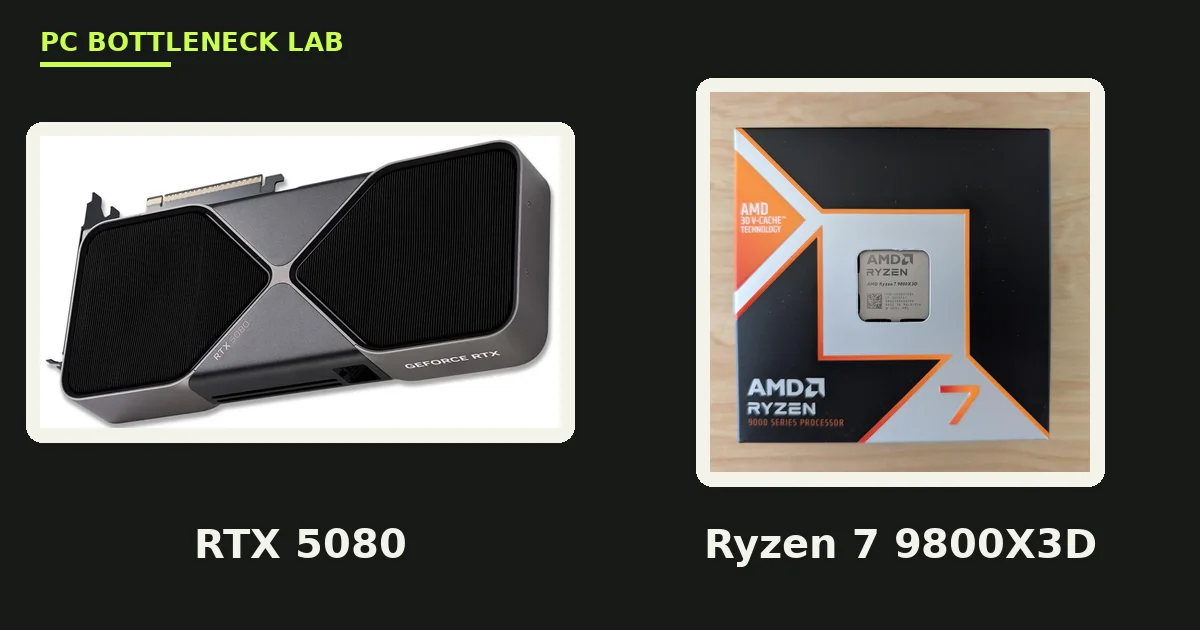
Key takeaways
- The best CPU for RTX 5070 Ti is the Ryzen 7 9800X3D, and it is also the best for the RTX 5080.
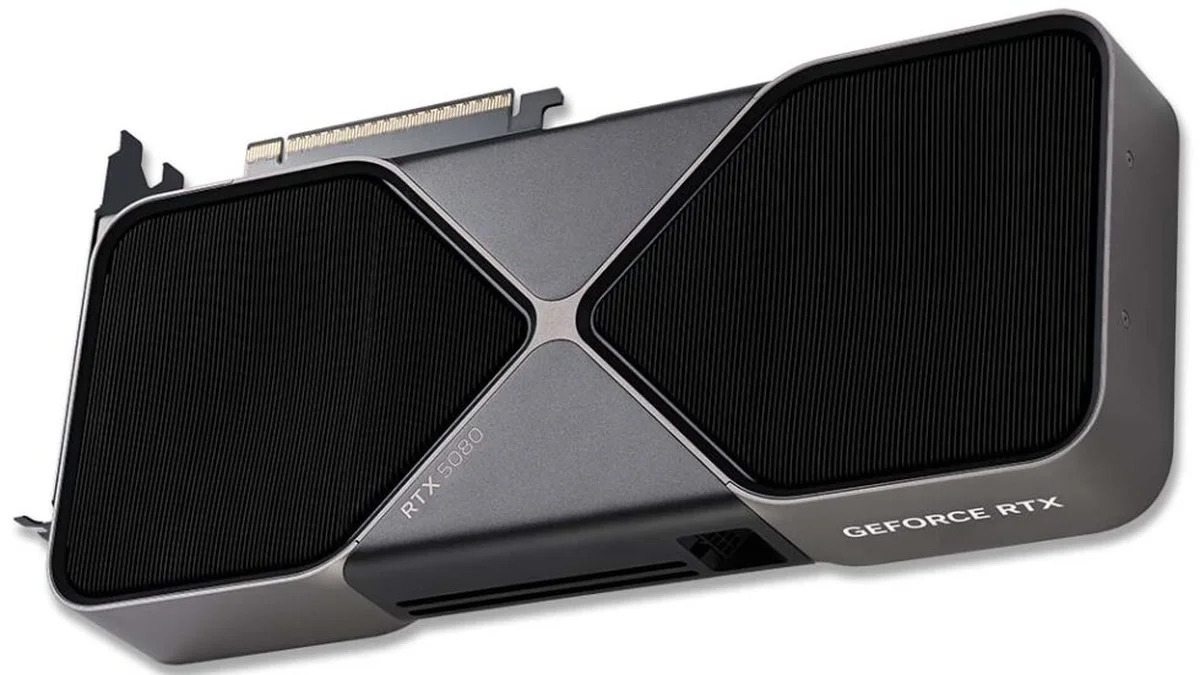
- The two cards share 16GB of GDDR7 on a 256-bit bus. The 5080 has about 20% more CUDA cores for $250 more at launch.
- Best value: Ryzen 7 7800X3D for the 5070 Ti. Best gaming plus work: Ryzen 9 9950X3D for the 5080.
- Best budget: Ryzen 5 9600X for the 5070 Ti. It is the minimum sensible pick for the 5080 at 1440p and 4K.
- The 5080 needs an 850W PSU, while the 5070 Ti needs 750W. Both cards cost far above launch in November 2026.
RTX 5070 Ti vs RTX 5080: the two cards at a glance
The two cards share the same chip family and the same memory, yet they are not the same card. The 5080 uses the full GB203 die, while the 5070 Ti uses a cut-down version. The table below is the reference spec, checked in November 2026. Both cards cost far above launch now. The full price story is here: GPU prices rising November 2026: buy before Black Friday.
| Spec | RTX 5070 Ti | RTX 5080 |
|---|---|---|
| CUDA cores | 8,960 | 10,752 |
| VRAM | 16GB GDDR7 | 16GB GDDR7 |
| Memory bus | 256-bit, 896 GB/s | 256-bit, 960 GB/s |
| Boost clock | 2.45 GHz | 2.62 GHz |
| Power (TGP) | 300W | 360W |
| Recommended PSU | 750W | 850W |
| Launch date | 20 February 2025 | 30 January 2025 |
| Launch price | $749 | $999 |
Best CPU for RTX 5070 Ti and 5080, ranked
The table below ranks the six picks by value, not by raw speed. MSRP is the launch price, not the price you will pay today, since prices move with stock and the 2026 memory shortage. The "Suits" column shows which card each CPU fits. A CPU that suits the 5070 Ti may be too weak for the 5080 at 1080p, yet fine at 4K.
| Rank | CPU | Best for | Suits | MSRP |
|---|---|---|---|---|
| 1 | Ryzen 7 9800X3D | Best overall | Both cards | $479 |
| 2 | Ryzen 9 9950X3D | Best gaming plus work | 5080 | $699 |
| 3 | Ryzen 7 7800X3D | Best value | 5070 Ti, 5080 at 1440p/4K | $449 |
| 4 | Core i7-14700K | Best Intel value | Both cards | $409 |
| 5 | Core i9-14900K | Best Intel flagship | 5080 | $589 |
| 6 | Ryzen 5 9600X | Best budget | 5070 Ti, 5080 at 1440p/4K | $279 |
1. Ryzen 7 9800X3D: the best overall
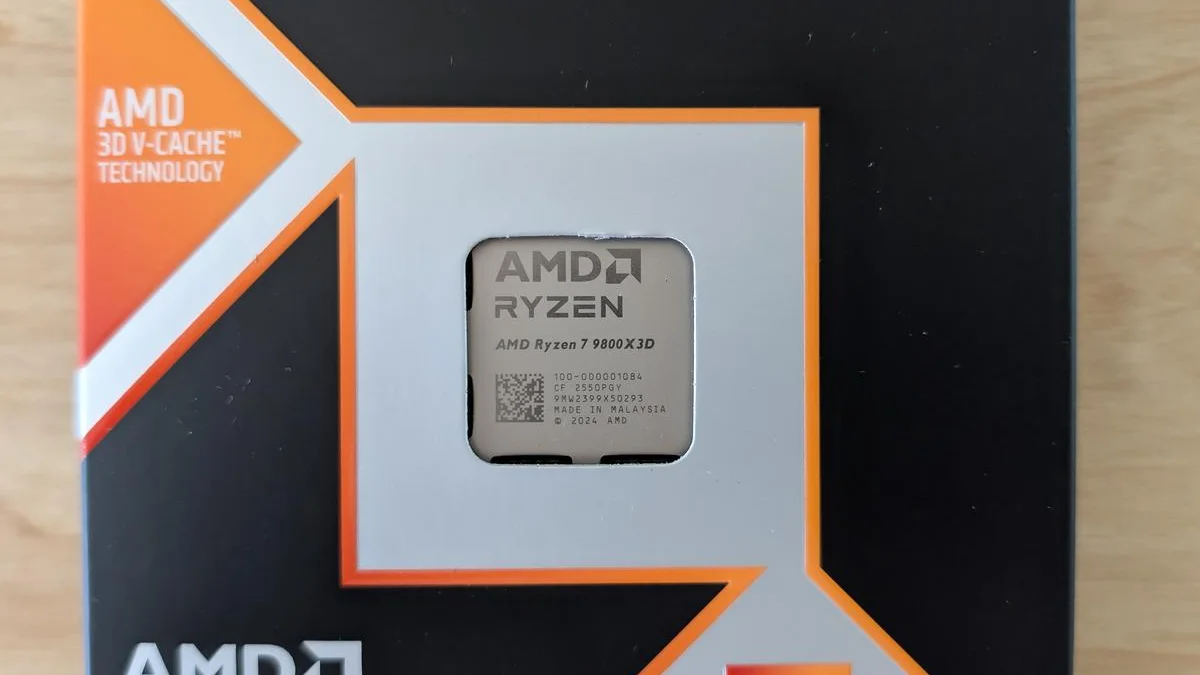
The 9800X3D is the best CPU for both cards, and it leads every gaming chart that matters. It pairs 96MB of L3 cache with eight Zen 5 cores at 5.2 GHz. One guide puts its bottleneck with the 5080 under 2% at 1440p high-refresh and 4K. Buy it when you want the fastest gaming CPU, or when you plan to reuse it with a bigger GPU later. The drawback is the price, since cheaper chips match it at 1440p and 4K with these cards.
2. Ryzen 9 9950X3D: the best gaming plus work
The 9950X3D is AMD's 16-core flagship with 3D V-Cache, at 128MB of L3 cache and a 5.7 GHz boost. In pure gaming it trades blows with the 9800X3D, since the card is the limit at 1440p and 4K. In work it dominates, with twice the cores for rendering, compiling, and streaming. Buy it when the PC earns money as well as playing games. The drawback is the price, since gamers alone gain almost nothing over the 9800X3D.
3. Ryzen 7 7800X3D: the best value
The 7800X3D is the best value pick for the 5070 Ti, and it still works for the 5080 at 1440p and 4K. It shares the same 96MB of 3D V-Cache as its successor and gives up very little in real gaming frame rates. TechSpot measured the 9800X3D only about 8% ahead at 1080p with a far stronger card, and the gap shrinks at 1440p and 4K. For the reverse pairing, see this: best GPU for Ryzen 7 7800X3D. The drawback is 1080p, where it trails the 9800X3D most.
4. Core i7-14700K: the best Intel value
The 14700K is the best Intel pick when you already own an LGA1700 board. Twenty cores and a 5.6 GHz boost keep it close to the X3D chips at 1440p and 4K. It also handles streaming and work beside gaming better than the eight-core AMD picks. One guide notes a 5 to 8% gap behind the X3D chips in the most CPU-bound 1080p titles, which is the only place it trails. Buy a new chip with an updated BIOS, since early 14th-gen chips had instability issues.
5. Core i9-14900K: the best Intel flagship
The 14900K is the fastest Intel chip for this pair, with 24 cores and a 6.0 GHz boost. It leads Intel's single-thread charts, which suits high-refresh gaming and heavy work. In cache-sensitive games it trails the 9800X3D, since it has no 3D V-Cache. The drawback is power and heat, since it draws far more than the Ryzen picks and needs a strong cooler. Buy it only when you want Intel's fastest, not when you want the best value.
6. Ryzen 5 9600X: the best budget pick
The 9600X is the cheapest CPU that does not hold the 5070 Ti back at 1440p. Six Zen 5 cores at 5.4 GHz are plenty when the card is the limit. For the 5080 it is the minimum sensible pick, and only at 1440p and 4K, where the card is the limit. At 1080p it holds the 5080 back, since the CPU matters more there. Buy it for the 5070 Ti on a tight budget, and put the saving into the card or the monitor.
Which CPU should you buy?
Match the pick to your card and your use, not to a benchmark chart. For the 5070 Ti, the 7800X3D is the value pick and the 9800X3D is the best. For the 5080, the 9800X3D is the pick, and the 9950X3D is the pick when work shares the PC. For mixed use on Intel, the 14700K is the value pick and the 14900K is the flagship. For the tightest budget, the 9600X works for the 5070 Ti, and for the 5080 only at 1440p and 4K. Check your own pair before you buy with the free tool: bottleneck calculator. For the full check method, see this: how to check for a CPU bottleneck.
What to avoid
Three traps catch buyers of these cards. The first is a weak CPU with the 5080, since a Core i5-12400F creates a significant bottleneck with it, per one guide. The second is an old four-core CPU, which caps either card at every resolution. The third is an early Intel 13th or 14th-gen chip on an old BIOS, since those chips had instability issues. Intel fixed them with microcode updates, so buy a new chip and update the BIOS first. The slowest frames, called 1% lows, show a CPU limit first. For the frame-time story in full, see this: stuttering and frame time: 1% lows explained.
The bottom line on the best CPU for RTX 5070 Ti and 5080
The best CPU for RTX 5070 Ti and RTX 5080 is the Ryzen 7 9800X3D for gaming. The Ryzen 9 9950X3D is the pick when work shares the PC. The 7800X3D is the value pick for the 5070 Ti, and the 14700K is the value pick on Intel. Spend on the card first at 1440p and 4K, and on the CPU first at 1080p. Check your pair first on the CPU GPU bottleneck calculator before you spend. For the tier below these cards, see this: best CPU for RTX 5060 and 5060 Ti.
Frequently asked questions
Which processor should I pair with the RTX 5070 Ti?
The Ryzen 7 9800X3D is the best overall, since it never becomes the limit at any resolution this card can drive. The Ryzen 7 7800X3D is the best value, with the same 96MB of L3 cache at a lower price. The Ryzen 5 9600X is the best budget pick for 1440p, and the Core i7-14700K is the best Intel choice.
What is the ideal CPU for the RTX 5080?
The Ryzen 7 9800X3D is the best overall, with a bottleneck under 2% at 1440p high-refresh and 4K, per one guide. The Ryzen 9 9950X3D is the best pick when gaming shares the PC with work. The Core i9-14900K is the fastest Intel pick, and the Core i7-14700K is the best Intel value.
Is the 7800X3D enough for the RTX 5080?
Yes, at 1440p and 4K, where the card is the limit. The 7800X3D shares the same 96MB of 3D V-Cache as the 9800X3D, and the gap between them shrinks at those resolutions. At 1080p high-refresh it trails the 9800X3D, since the CPU matters more there. Buy the 9800X3D for 1080p, and the 7800X3D for 1440p and 4K.
Can I pair a Ryzen 5 9600X with an RTX 5080?
Yes, but only at 1440p and 4K, where the card is the limit. Six Zen 5 cores at 5.4 GHz feed the card well at those resolutions. At 1080p the 9600X holds the 5080 back, since the CPU matters more there. For 1080p high-refresh with a 5080, a Ryzen 7 9800X3D is the right pick.
How much wattage do a 5070 Ti and 5080 need?
The 5070 Ti needs a 750W PSU, since the card draws 300W and a typical CPU adds 100 to 120W. The 5080 needs an 850W PSU, since the card draws 360W. Buy a quality unit from a known brand. Check that it has the right connector for your card, since the 5080 uses a 12V-2x6 connector.
Is the RTX 5080 worth $250 more than the 5070 Ti?
At launch, the gap was $250 for about 20% more CUDA cores and a higher boost clock. At November 2026 street prices the gap is far wider, since both cards cost well above launch. At launch prices the 5080 is the better card for 4K, yet at today's prices the 5070 Ti is usually the better value.
How this guide was prepared
This guide uses NVIDIA's reference specifications for both cards, checked in November 2026. The CPU picks come from the consensus of three independent pairing guides, and the MSRP figures are launch prices, not current retail prices.
Last updated: November 11, 2026