
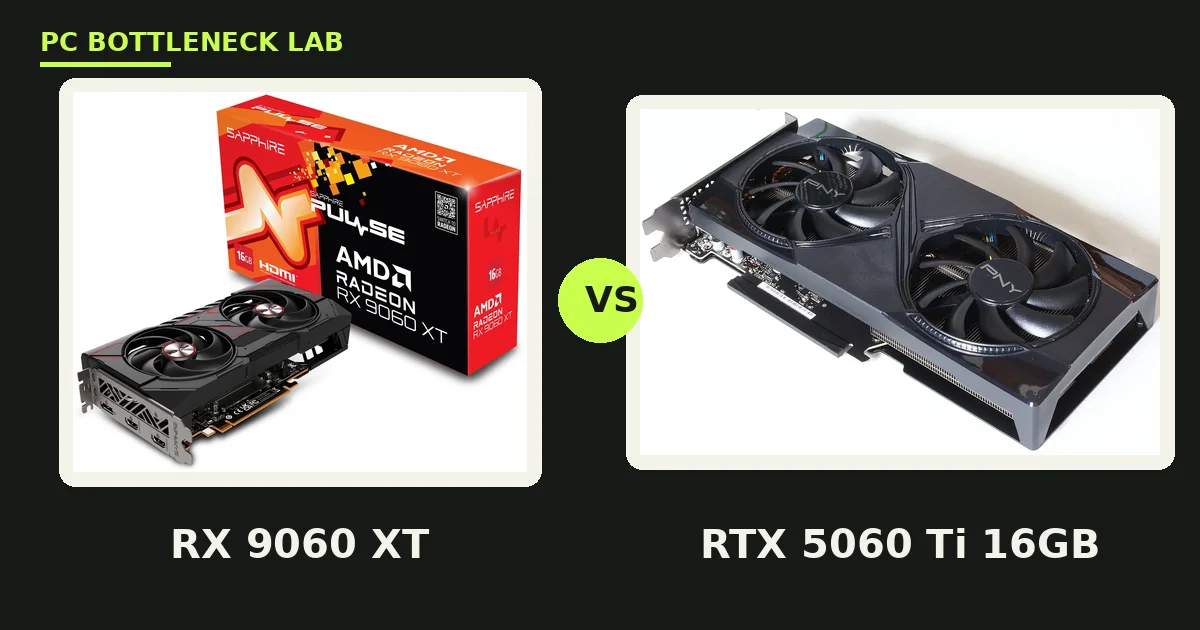
Key takeaways
- In raw raster speed at 1440p, the two cards are effectively tied. The 5060 Ti averages 1 to 5 percent ahead, depending on the game suite.
- Ray tracing is the real gap. The 5060 Ti leads by 15 to 25 percent at 1440p, and more in path tracing.
- DLSS 4 with Multi Frame Generation is exclusive to Blackwell, while FSR 4 now covers 300-plus titles.
- At launch, the 9060 XT 16GB cost 349 dollars and the 5060 Ti 16GB cost 429 dollars, an 80-dollar gap.
- Skip the 8GB version of either card. The 16GB version is the only sensible pick for 1440p in 2026.
RX 9060 XT vs RTX 5060 Ti 16GB: the short answer
Buy the RX 9060 XT 16GB if you want the most raster performance per dollar at 1440p. Buy the RTX 5060 Ti 16GB if ray tracing or DLSS 4 is the reason you are upgrading. That is the verdict of PCBuildHelper, TechUpgradeGuide, and TheTechSearch, and the benchmarks below back it up. For the VRAM story in full, see this: VRAM bottleneck: 8GB vs 12GB vs 16GB.
| Scenario | Winner | Why |
|---|---|---|
| 1440p raster AAA | RX 9060 XT 16GB | Tied on speed, cheaper per frame |
| 1440p ray tracing | RTX 5060 Ti 16GB | 15 to 25 percent faster |
| 1080p esports, 240 Hz | RTX 5060 Ti 16GB | DLSS 4 Multi Frame Generation, Reflex 2 |
| Streaming | RTX 5060 Ti 16GB | 9th-gen NVENC encoder |
| Linux gaming | RX 9060 XT 16GB | Open drivers, FSR 4.1 support |
Specs compared
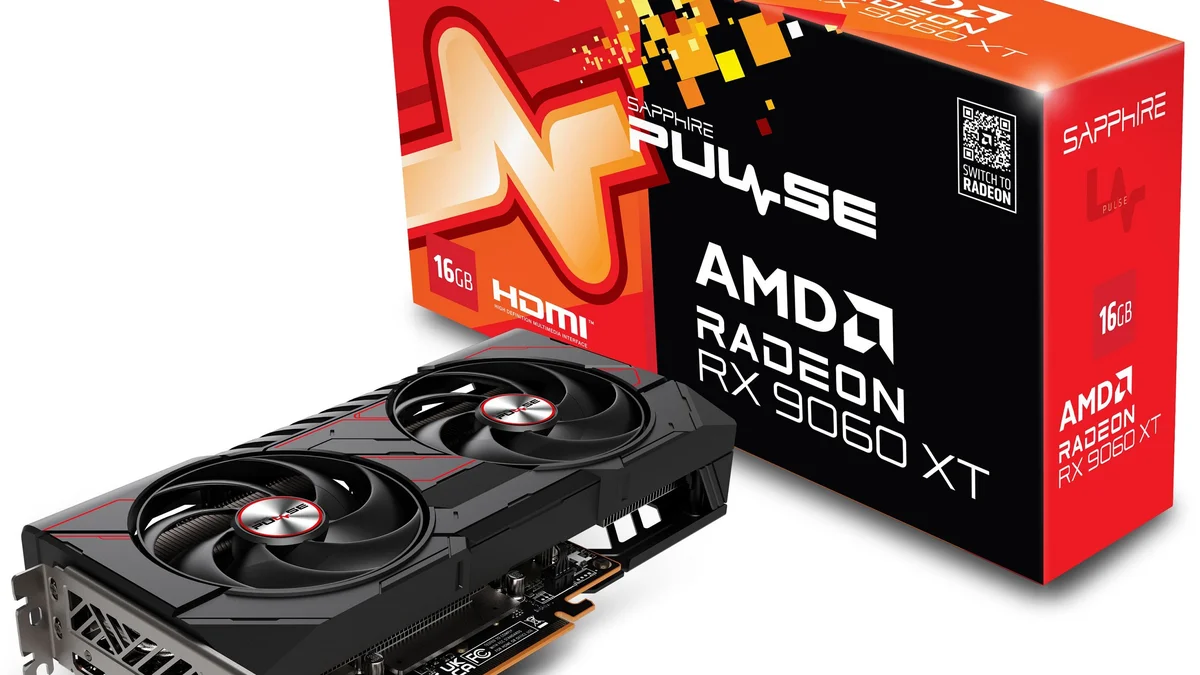
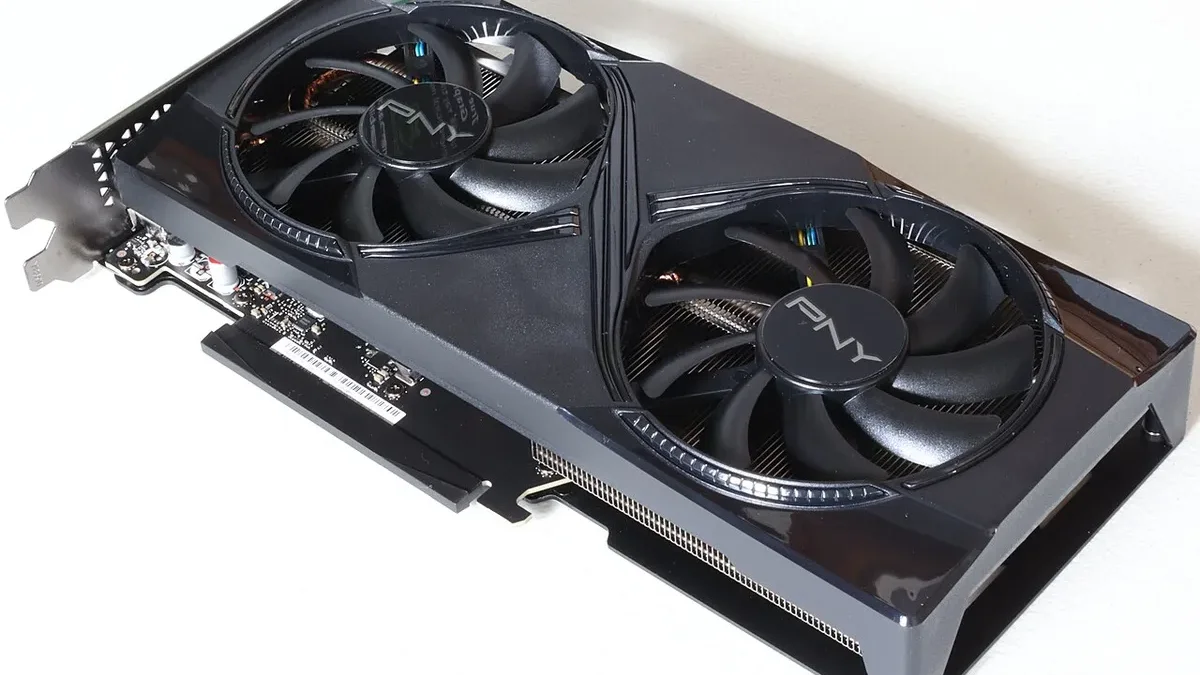
The two cards look close on paper, yet they are built on different architectures. The 5060 Ti uses NVIDIA Blackwell, with GDDR7 memory and 4th-gen ray tracing cores. The 9060 XT uses AMD RDNA 4, with GDDR6 memory and 3rd-gen ray accelerators. Both cards ship with 16 GB of VRAM on a 128-bit bus, and both draw about 180 watts. Check your own pair with the free tool: bottleneck calculator.
| Spec | RX 9060 XT 16GB | RTX 5060 Ti 16GB |
|---|---|---|
| Architecture | RDNA 4 (Navi 44) | Blackwell (GB206) |
| Cores | 2,048 stream processors | 4,608 CUDA cores |
| VRAM | 16 GB GDDR6 | 16 GB GDDR7 |
| Memory bus | 128-bit | 128-bit |
| Power | 182 W | 180 W |
| Ray tracing | 3rd-gen ray accelerators | 4th-gen RT cores |
| Upscaling | FSR 4 | DLSS 4 + Multi Frame Generation |
| Launch | June 2025, $349 | April 2025, $429 |
Raster performance at 1440p
Strip away the upscalers and the two chips are nearly identical. Across the launch reviews and later driver revisions, the RTX 5060 Ti averages 1 to 5 percent ahead at 1440p. The exact gap depends on the test suite, per TheTechSearch. Tom's Hardware ran both 16GB cards across a 10-game average at high and ultra settings. At 1440p, it found the 5060 Ti at 142 FPS against the 9060 XT at 134 FPS, a lead of about 6 percent. At 1080p, the same suite found 194 FPS against 187 FPS, a lead of about 4 percent. HowManyFPS, which aggregates benchmark data across 100-plus games, puts the 9060 XT slightly ahead on average across that broader set. One smaller test set found the 9060 XT winning 7 tests, the 5060 Ti winning 5, with 2 ties. The slowest frames, called 1% lows, show a CPU limit first. For the frame-time story in full, see this: stuttering and frame time: 1% lows explained.
Ray tracing performance
Turn on ray tracing and the gap opens to 15 to 25 percent in NVIDIA's favor at 1440p, per TheTechSearch and MalsomTech. Indiana Jones and the Great Circle at 1440p with the Supreme preset forces ray tracing on. Tom's Hardware put the 5060 Ti at roughly 56 FPS native against roughly 44 FPS for the 9060 XT, a 27 percent lead. Cyberpunk 2077 at 1440p Ultra with ray tracing and upscaling gave the 5060 Ti 112 FPS against 102 FPS for the 9060 XT. That is a lead of about 10 percent, per PCBuildHelper. Alan Wake 2 at 1440p Ultra with ray tracing gave 68 FPS against 58 FPS, per the HowManyFPS aggregate. RDNA 4 improved AMD's ray tracing hardware a lot over the previous generation. Blackwell's ray tracing cores still finish first in nearly every title with meaningful ray-traced effects.
DLSS 4 vs FSR 4
DLSS 4 with Multi Frame Generation is exclusive to NVIDIA's Blackwell architecture, which includes the RTX 5060 Ti. In supported titles it can generate up to three AI frames for every one rendered frame, a 4x total multiplier. The RX 9060 XT runs FSR 4, AMD's hardware-accelerated upscaler with 64 AI accelerators. FSR 4 support passed 300 titles with the 4.1 release, per TheTechSearch, while DLSS 4 covers 250-plus games. The quality gap at 1440p has narrowed to the point where most players will not spot the difference without freeze-framing. The real difference is Multi Frame Generation, which FSR 4 does not match.
Price and value in November 2026
At launch, the 9060 XT 16GB cost 349 dollars and the 5060 Ti 16GB cost 429 dollars, an 80-dollar gap. Both cards now sell far above launch, per TechUpgradeGuide and TheTechSearch. On PCPartPicker's lowest in-stock listings on 9 November 2026, the 9060 XT 16GB was 679.99 dollars. The 5060 Ti 16GB was 769.99 dollars, a gap of about 90 dollars. For that 90 dollars, you give up about 6 percent of raster performance at 1440p, per Tom's Hardware. The full price story is here: GPU prices rising November 2026: buy before Black Friday.
Which CPU pairs with each card?
Both cards are 1440p cards, and both need the same CPU. A Ryzen 5 9600X or a Ryzen 5 7600X is the sensible default, and a Ryzen 7 7800X3D is the pick for high-refresh esports. For the 5060 Ti in full, see this: RTX 5060 Ti CPU bottleneck: which CPU you need. For the ranked CPU list, see this: best CPU for RTX 5060 and 5060 Ti.
The bottom line on RX 9060 XT vs RTX 5060 Ti
RX 9060 XT vs RTX 5060 Ti comes down to one question: do you turn ray tracing on? If you mostly play raster games at 1440p, buy the 9060 XT 16GB and keep the 80 to 90 dollars. If you play ray-traced games as a regular habit, or you stream with NVENC, buy the 5060 Ti 16GB. Either way, buy the 16GB version, never the 8GB one. Check your pair first on the CPU bottleneck calculator before you spend on new parts.
Frequently asked questions
Which is better, RX 9060 XT or RTX 5060 Ti?
It depends on the game. In raw raster speed at 1440p, the two cards are effectively tied, with the 5060 Ti 1 to 5 percent ahead depending on the suite. With ray tracing on, the 5060 Ti leads by 15 to 25 percent. Buy the 9060 XT for raster value, and the 5060 Ti for ray tracing, DLSS 4, or streaming.
Is the 5060 Ti worth 80 dollars more than the 9060 XT?
Only if you use what the extra money buys. The 80-dollar launch gap buys 15 to 25 percent more ray tracing performance, DLSS 4 Multi Frame Generation, and a 9th-gen NVENC encoder. If you mostly play raster games at 1440p, keep the 80 dollars and buy the 9060 XT. The raster gap is only 1 to 5 percent.
Is 16GB of VRAM enough for 1440p in 2026?
Yes. 16 GB is the sweet spot for 1440p in 2026, and it covers ultra settings and ray tracing. Modern AAA titles already push past 8 GB of VRAM at 1440p ultra settings. That is why the 8GB version of either card is not worth buying. Buy the 16GB version of whichever card you choose.
Which of these two cards handles ray tracing better?
The RTX 5060 Ti, by a clear margin. It leads by 15 to 25 percent in ray-traced titles at 1440p, per TheTechSearch and MalsomTech. In Indiana Jones and the Great Circle at 1440p with the Supreme preset, it scored roughly 56 FPS native. The 9060 XT scored roughly 44 FPS, a 27 percent lead for NVIDIA.
Does FSR 4 match DLSS 4?
For upscaling quality at 1440p, mostly yes. FSR 4 support passed 300 titles with the 4.1 release, while DLSS 4 covers 250-plus games. The quality gap has narrowed to the point where most players will not spot it. The difference is Multi Frame Generation, which is exclusive to Blackwell and generates up to three AI frames per rendered frame.
Should I buy the 8GB version of either card?
No. Both cards come in 8GB and 16GB versions, and the 8GB version is not worth buying for AAA gaming in 2026. Modern AAA titles regularly push past 8GB of VRAM at 1440p ultra settings. Black Myth: Wukong, Indiana Jones and the Great Circle, and Cyberpunk 2077 all do it. Buy the 16GB version.
How this guide was prepared
This guide uses the published comparisons of TechUpgradeGuide, PCBuildHelper, MalsomTech, MyPCBottleneck, and TheTechSearch. The benchmark data comes from Tom's Hardware, TechSpot, and HowManyFPS. The street prices come from PCPartPicker listings dated 9 November 2026, as reported by TechUpgradeGuide. No measured frame rates are claimed as our own, since this guide compares published benchmarks.
Last updated: November 11, 2026