
Key takeaways
- The Ryzen 5 9600X leads by about 3 to 6 percent in games, not the double-digit jump the new name suggests.
- The gaming gap shrinks with resolution, and it nearly vanishes at 4K.
- In productivity the lead grows, near 12 to 16 percent in Cinebench and Geekbench tests.
- The Ryzen 5 9600X draws far less power at 65W against 105W, so it runs cooler and quieter.
- Both chips use the same AM5 socket, so owners can swap without a new board.
Ryzen 5 9600X vs Ryzen 5 7600X bottleneck: the short answer
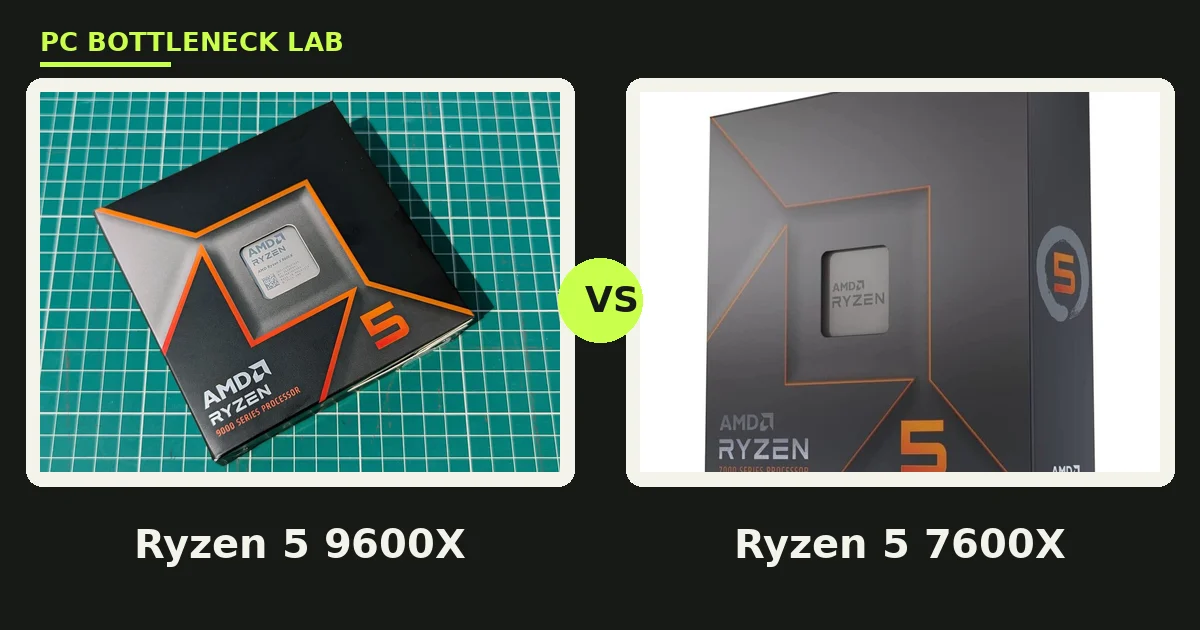
A bottleneck is the part that holds the rest of the system back, and for these two chips the answer is nearly the same. Both are 6-core, 12-thread chips on the AM5 socket with 32MB of L3 cache. The Ryzen 5 9600X is newer and faster, but the gaming gain is small, near 3 to 6 percent. The Ryzen 5 9600X vs Ryzen 5 7600X bottleneck balance barely changes between the two. The same GPU and the same resolution decide the result. Check your own pair first with the free PC bottleneck calculator before you spend on either chip.
| Spec | Ryzen 5 7600X | Ryzen 5 9600X |
|---|---|---|
| Architecture | Zen 4 | Zen 5 |
| Cores / threads | 6 / 12 | 6 / 12 |
| Base clock | 4.7 GHz | 3.9 GHz |
| Boost clock | 5.3 GHz | 5.4 GHz |
| L3 cache | 32MB | 32MB |
| Power draw (TDP) | 105W | 65W |
| Socket | AM5 | AM5 |
| Memory | DDR5 | DDR5 |
| Launch | September 2022 | August 2024 |
Where the small gaming gap comes from
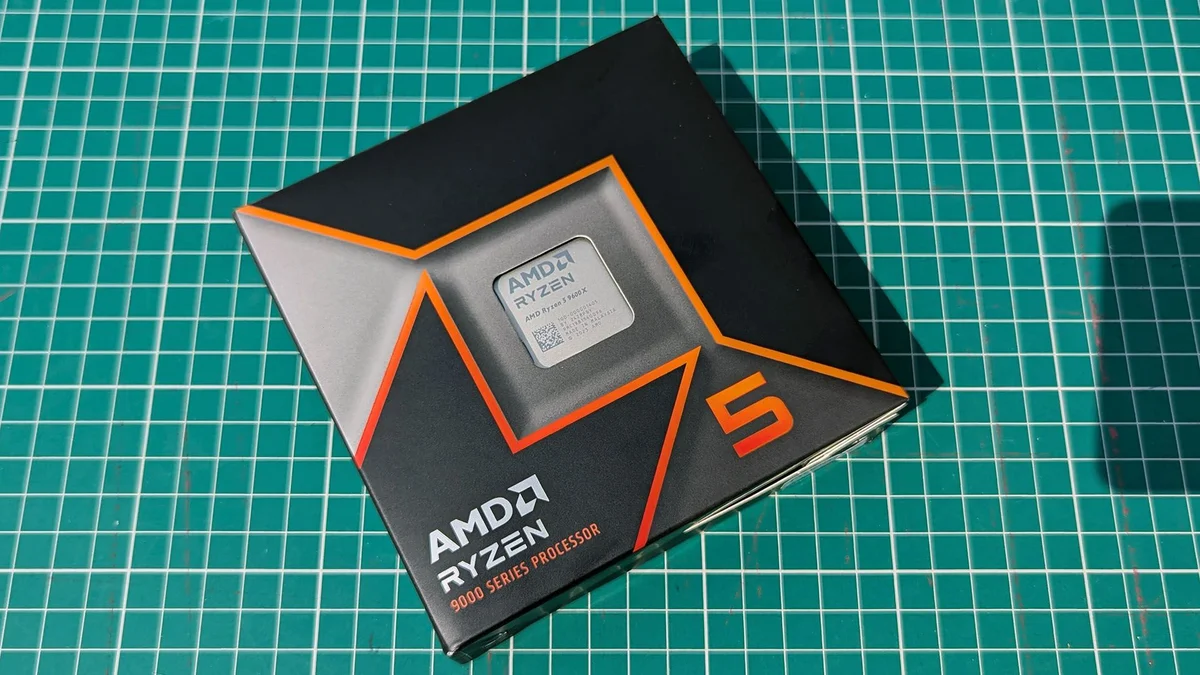
IPC is the work a CPU does in each clock cycle, and Zen 5 does more of it than Zen 4. AMD puts the Zen 5 IPC uplift near 16 percent per clock over Zen 4. That gain should make the 9600X much faster, but the clock speeds pull the other way. The 9600X starts at a lower base clock, 3.9 GHz against 4.7 GHz, so its IPC gain spends much of its lead just catching up. The boost clocks are close, 5.4 GHz against 5.3 GHz, so the final gap stays small. Both chips also share the same 32MB of L3 cache, which matters a lot in games. The result is a small but real lead for the newer chip, near 3 to 6 percent in most game suites. For the wider Zen 5 picture, see this: Ryzen 9000 series bottleneck guide.
Gaming by resolution: where the gap shrinks
Resolution decides how much the CPU matters, and that rule shrinks this gap fast. At 1080p with a top-tier GPU, the CPU is the limit, and the 9600X shows its widest lead. WillItBottleneck measured about 4 percent here across its game set. At 1440p the GPU takes more of the load, and the lead holds at a similar small size. At 4K the GPU does nearly all the work, and the gap narrows to near nothing. TechSpot found the same pattern, with a 6 percent lead at medium settings and 3.5 percent at high or ultra settings. The Ryzen 5 9600X vs Ryzen 5 7600X bottleneck gap is therefore widest where few people play, and smallest where most people play. For a strong pairing with the newer chip, see this: Ryzen 5 9600X plus RTX 5070 bottleneck.
| Source | What it measured | 9600X lead |
|---|---|---|
| TechSpot, 12-game suite | 1080p, medium settings | About 6% |
| TechSpot, 12-game suite | 1080p, high or ultra settings | About 3.5% |
| TechSpot, earlier review | 1080p, 13-game suite | About 1% |
| WillItBottleneck | 1080p with a top-tier GPU | About 4% |
| CPU-Monkey | Games, average | About 5% |
Productivity: where Zen 5 pulls further ahead
Productivity is work like rendering, encoding, and compiling, and here the 9600X pulls further ahead. CPU-Monkey reports Cinebench R23 single-core scores of 2,207 against 1,976, and multi-core scores of 17,689 against 15,315. Geekbench 6 shows the same pattern, with single-core scores of 3,291 against 2,846, and multi-core scores of 14,418 against 12,714. Those gaps sit near 12 to 16 percent, far above the gaming gap. The 9600X also gains in AVX-512 work, since Zen 5 has a full 512-bit data path for those instructions. That shows up in AI chess engines and PS3 emulation, where the lead can be much larger. For most gamers, though, productivity is a side benefit, not the reason to buy. For GPU pairings with the older chip, see this: best GPU for Ryzen 5 7600X.
| Benchmark (CPU-Monkey) | Ryzen 5 7600X | Ryzen 5 9600X | Lead |
|---|---|---|---|
| Cinebench R23, single-core | 1,976 | 2,207 | About 12% |
| Cinebench R23, multi-core | 15,315 | 17,689 | About 15% |
| Geekbench 6, single-core | 2,846 | 3,291 | About 16% |
| Geekbench 6, multi-core | 12,714 | 14,418 | About 13% |
Power and cooling: the 65W surprise
The biggest practical difference between these chips is power, not speed. The Ryzen 5 9600X carries a 65W TDP, while the Ryzen 5 7600X carries 105W. The newer chip does more work with far less power, so it runs cooler and quieter on the same cooler. It also leaves more thermal headroom in small cases, where heat builds fast. AMD also offers a 105W mode for the 9600X in the BIOS, which lifts performance a little at the cost of more heat. For most builds the stock 65W mode is the right choice, since the extra speed is small. The 7600X, by contrast, needs a decent cooler to stay quiet under load, and it will run hotter in the same case.
Same socket, same board: the swap question
Both chips use the AM5 socket and DDR5 memory, so the platform cost is the same. An owner of a 7600X can drop in a 9600X without buying a new board or new RAM. Older AM5 boards may need a BIOS update first, so check the board maker page before you swap. The upgrade path also runs further, since the same socket takes the 9800X3D and other newer chips. For the AM5 upgrade ladder in full, see this: AM5 upgrade path: 7600 to 9800X3D. But the swap from a 7600X to a 9600X is a poor use of money. A 4 percent gaming gain is not worth the cost of a new chip on the same board and memory. Spend that money on a better GPU instead, which moves frame rates far more.
Which chip should you buy
Buy the Ryzen 5 9600X if you are building new and the price gap is small. It is faster in games and in work, and it runs cooler on less power. Buy the Ryzen 5 7600X if it costs clearly less and gaming is your main workload. The gaming gap is small, so the cheaper chip is often the sharper buy. The 7600X also makes sense as a used or discounted pick for a budget AM5 build. If you already own the 7600X, keep it and spend on your GPU or monitor instead. For GPU pairings with the newer chip, see this: best GPU for Ryzen 5 9600X.
The bottom line on the Ryzen 5 9600X vs Ryzen 5 7600X bottleneck
The Ryzen 5 9600X vs Ryzen 5 7600X bottleneck story is a small step, not a new tier. In games the newer chip leads by about 3 to 6 percent, and the gap nearly vanishes at 4K. In productivity the lead grows to near 12 to 16 percent, and the 65W power draw makes the newer chip cooler and quieter. Buy the 9600X when building new, buy the 7600X when it costs clearly less, and never swap one for the other. Run your exact parts through the GPU bottleneck calculator before you buy. Your GPU and monitor decide how much of the gap you will see.
Frequently asked questions
Is the Ryzen 5 9600X much faster than the 7600X in games?
No, the lead is small. Published tests put the Ryzen 5 9600X about 3 to 6 percent ahead in games. TechSpot measured 6 percent at medium settings and 3.5 percent at high or ultra settings. The gap shrinks further at 1440p and nearly vanishes at 4K, where the graphics card does the work. Do not expect a double-digit jump.
Should I upgrade from a Ryzen 5 7600X to a 9600X?
No, in most cases. A 4 percent gaming gain is not worth the cost of a new chip on the same AM5 board and DDR5 memory you already own. Spend the money on a better GPU instead, which moves frame rates far more. The only good reason to swap is heavy productivity work, where the lead grows to near 15 percent.
Does the Ryzen 5 9600X use the same motherboard as the 7600X?
Yes. Both chips use the AM5 socket and DDR5 memory, so they fit the same boards. Older AM5 boards may need a BIOS update before they accept the 9600X, so check the board maker page first. The same socket also takes newer chips like the 9800X3D, which makes AM5 a good long-term platform.
Is the Ryzen 5 9600X better for streaming than the 7600X?
Yes, slightly. The Zen 5 single-core gains leave a little more headroom for a light software encode while you play. The 65W power draw also keeps the chip cooler under that extra load. For serious streaming, though, a GPU encoder like NVENC does the heavy lifting, and the CPU choice matters far less. Pick the GPU first.
Which CPU is better for a new AM5 build in 2026, the 9600X or the 7600X?
The 9600X is the better pick when the price gap is small, since it is faster in games and work and runs cooler. The 7600X wins when it costs clearly less and gaming is your main workload, since the gaming gap is only a few percent. Compare current local prices before you buy, since the right pick changes with the market.
Does the Ryzen 5 9600X run cooler than the 7600X?
Yes. The Ryzen 5 9600X carries a 65W TDP against 105W for the 7600X. It draws far less power and runs cooler on the same cooler. It also stays quieter under load and leaves more thermal headroom in small cases. AMD offers a 105W mode in the BIOS, but the stock 65W mode suits most builds.
How this guide was prepared
This guide compares the Ryzen 5 9600X and Ryzen 5 7600X using TechSpot, WillItBottleneck, CPU-Monkey, and AMD specification pages. Specs and launch dates come from the manufacturers and those comparison pages, and the performance gaps are reported as the ranges those sources published. No frame rates were measured by us, and no street price is claimed.
Last updated: November 12, 2026