Key takeaways
- 16GB vs 32GB RAM in November 2026 is a price question first: a 32GB DDR5 kit costs roughly $429 to $600 in the US, against about $95 before the shortage.
- 16GB is enough for gaming alone at 1080p and 1440p, since most games use well under 16GB.
- 32GB is worth it when you stream, edit video, or keep many apps open while you play.
- No forecaster on record sees meaningful relief before late 2027, so waiting has a real cost.
- Always buy two matched sticks, since dual-channel RAM matters more than raw capacity.
16GB vs 32GB RAM: the short answer
RAM is the memory your PC uses for work in progress. The CPU reads game data from RAM, so slow or full RAM can stutter a game. A year ago, 32GB was the easy default, since it cost little more than 16GB. The shortage changed that. A DRAM shortage driven by AI memory demand has pushed DDR5 prices several times higher than a year ago. A RAM price tracker updated on 3 November 2026 puts a 32GB DDR5 kit at roughly $429 to $600 in the US. Before the shortage, the same kit cost about $95. The DDR5 chip spot price hit $61.50 on 3 November, against $27.20 in December 2025. So the question is no longer which size is better. The question is whether the extra 16GB is worth roughly $250 to $400 more to you. For gaming alone, it is not. For heavy multitasking, it is.
What the price rise actually looks like
Prices move fast in a shortage, so treat every figure as a dated reading, not a fixed price. A tracker reading from 2 November 2026 shows a 32GB DDR5-6000 kit rising from about $459 in late October to $569.97 on 2 November. That is a rise of about 25% in three days. A daily tracker updated on 6 November 2026 lists a retail 32GB kit at $461.62, with the DDR5 chip up 13.1% in 50 days. The lowest tracked US 32GB DDR5 kit was $479.99 on 3 November 2026, with a median of $549.99 across 23 products. A 64GB kit rose from $989 to $1,099.97 in the same window, and a 64GB Kingston FURY Beast kit was listed at $1,059.99. TrendForce puts conventional DRAM contract prices up 90 to 95% quarter on quarter in the first quarter of 2026. A further 10 to 15% rise is projected for the fourth quarter. The shortage is expected to run through the first half of 2027, and no forecaster on record sees meaningful relief before late 2027.
| Kit | Reported price, Nov 2026 | Before the shortage |
|---|---|---|
| 32GB DDR5 kit, typical range | Roughly $429 to $600 | About $95 |
| 32GB DDR5-6000 kit, 2 Nov reading | $569.97 | About $459 in late Oct |
| 32GB DDR5 kit, lowest tracked 3 Nov | $479.99 | Not tracked here |
| 32GB DDR5 kit, median across 23 products | $549.99 | Not tracked here |
| 64GB DDR5 kit | $989 to $1,099.97 | Not tracked here |
| DDR5 16Gb chip spot price, 3 Nov | $61.50 | $27.20 in Dec 2025 |
16GB vs 32GB RAM for gaming
Most games in 2026 use 8GB to 12GB of RAM while running, so 16GB leaves room for Windows and a few background apps. At 1080p and 1440p, the frame rate gap between 16GB and 32GB is small in most titles, since the GPU and CPU set the pace. The gap shows up when RAM fills up: the PC starts paging to the SSD, and the game stutters. That happens with 16GB when you run Chrome with many tabs, Discord, Spotify, and a game at once. It also happens in a few heavy games with large maps and many background tasks. For gaming alone, 16GB is enough. For gaming plus streaming, recording, or editing, 32GB is the safer pick. Read the full capacity guide here: how much RAM do you need for gaming in 2026. And if you wonder whether RAM can limit a PC at all, see this: does RAM cause a bottleneck.
| Use case | 16GB | 32GB |
|---|---|---|
| Gaming alone, 1080p | Enough | No real gain |
| Gaming alone, 1440p | Enough | No real gain |
| Gaming plus Discord and browser | Tight, close apps | Comfortable |
| Gaming plus streaming and recording | Tight, may stutter | Recommended |
| Video editing, 3D work, many apps | Not enough | Recommended |
| Future-proofing a new build | Short, upgrade later | Safer for years |
Who still needs 32GB in the shortage
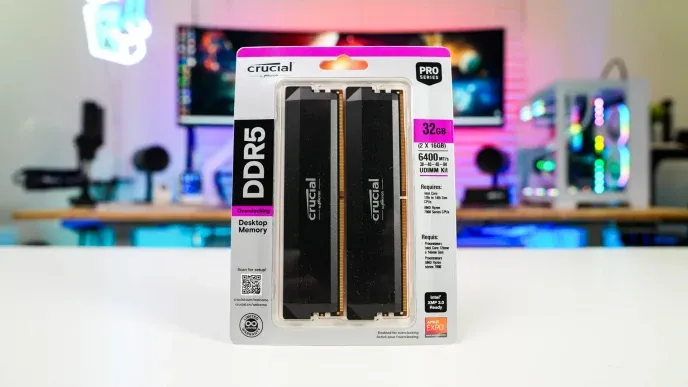
Buy 32GB when your work fills RAM every day. Streamers need it, since OBS, chat, a browser, and the game run at once. Video editors need it, since timelines and previews eat memory fast. Players of heavy simulation and open-world games need it when they also run mods, maps, and voice apps. Developers and 3D artists need it for large projects. If you fit one of these groups, the extra cost hurts, yet the stutter without it hurts more. Buy the cheapest 32GB DDR5-6000 kit from a known brand, and skip fancy heat spreaders and RGB, since they add cost without speed. If you buy 32GB, buy it as two 16GB sticks, not four 8GB sticks, since two sticks run faster on most boards.
Who should buy 16GB now
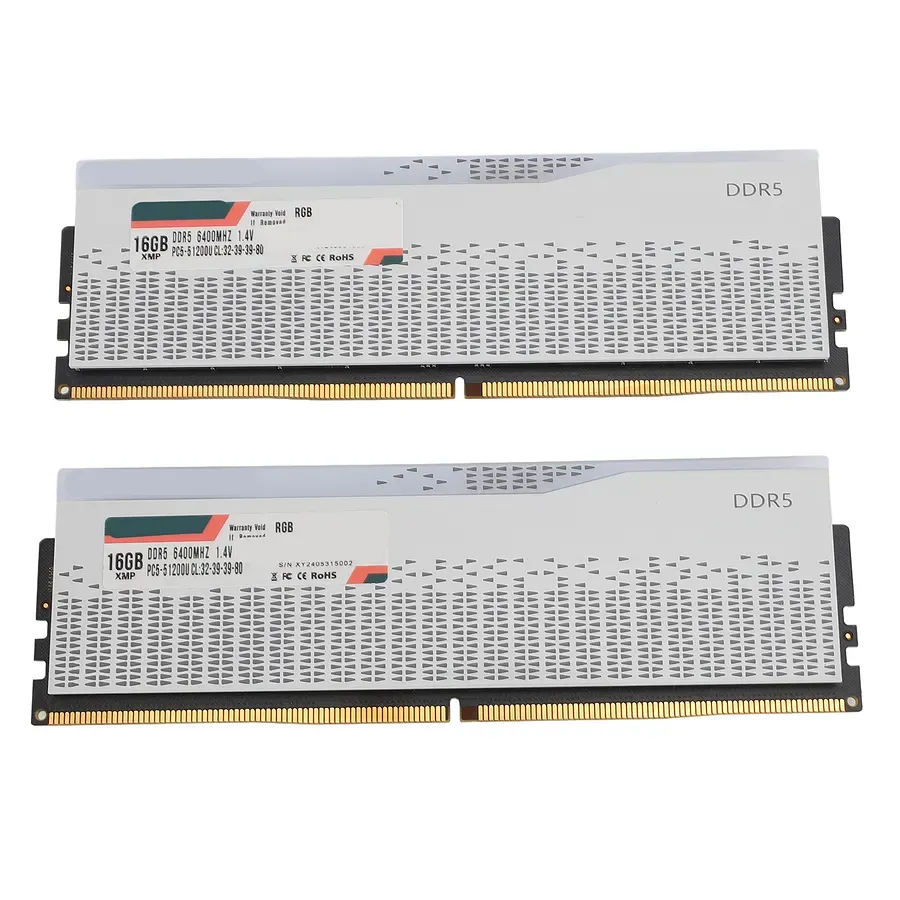
Buy 16GB when you play games and little else. A 16GB kit as two 8GB sticks is the smart buy for a 1080p or 1440p gaming PC in November 2026. It costs far less than 32GB, and you can add a second matched kit later if prices fall. This is the best move for budget builds, for esports players, and for anyone whose PC is mostly a gaming machine. It is also the best move when your board has only two RAM slots, since you can still upgrade later by swapping the kit. Do not buy a single 16GB stick, since single-channel RAM halves memory bandwidth and can look like a CPU bottleneck. Read why two sticks matter here: dual-channel vs single-channel RAM. Check your own pair before you spend with the free tool: PC bottleneck calculator.
The DDR4 escape hatch
DDR4 is the cheap way out of the DDR5 shortage for some builders. AM4 boards use DDR4, and DDR4 prices have risen less steeply than DDR5 in this shortage. A Ryzen 5 5600 on an AM4 board with 32GB of DDR4 can cost far less than a new AM5 build with 32GB of DDR5. The trade is real: DDR4 is slower, and AM4 has no upgrade path to new CPUs. Still, for a 1080p or 1440p gaming PC, DDR4 is fast enough, and the money saved buys a better GPU. Read the DDR4 against DDR5 comparison here: DDR4 vs DDR5 RAM speed bottleneck. Do not buy DDR4 for a new AM5 board, since AM5 boards take DDR5 only. And do not chase extreme DDR5 speeds in a shortage, since the gain is small: does extreme DDR5-8000 speed help.
Buying rules for the shortage
First, buy two matched sticks, never one. Second, buy DDR5-6000 for AM5, since it is the sweet spot for Ryzen 9000 chips. Third, check your board's memory list before you buy, since not every kit runs at its rated speed on every board. Fourth, do not pay extra for RGB or tall heat spreaders, since they add nothing to frame rates. Fifth, keep your receipt and your box, since RAM prices move fast and a return window matters. Sixth, if you must choose between more RAM and a better GPU, buy the GPU first. The GPU sets the frame rate when you game. If you are unsure whether to upgrade the CPU or the GPU first, read this: should you upgrade your CPU or GPU first.
The bottom line on 16GB vs 32GB RAM
16GB vs 32GB RAM in the 2026 shortage comes down to your daily use, not to a spec sheet. Buy 16GB when you game and little else, and spend the savings on the GPU. Buy 32GB when you stream, edit, or run heavy apps beside your game. Either way, buy two matched sticks, and do not wait for prices to fall, since no forecaster on record sees relief before late 2027. Check your pair on the CPU bottleneck calculator before you buy.
Frequently asked questions
Will 16GB RAM still be enough for new games in 2027?
Probably, for most games at 1080p and 1440p. New games are asking for more memory, but 16GB still covers the recommended specs of most 2026 releases. If you play at 4K, stream, or keep many apps open, 32GB is the safer buy while prices are high.
Is 32GB RAM worth it in the 2026 shortage?
It is worth it only when your daily use fills 16GB. Streamers, video editors, and heavy multitaskers gain real comfort from 32GB. Gamers who play one game at a time gain little, since the GPU and CPU set the pace. At roughly $429 to $600 for a 32GB DDR5 kit in November 2026, the extra cost is hard to justify for gaming alone.
Why are RAM prices so high in November 2026?
A DRAM shortage driven by AI memory demand has pushed DDR5 prices several times higher than a year ago. The DDR5 chip spot price hit $61.50 on 3 November 2026, against $27.20 in December 2025. Contract prices rose 90 to 95% in the first quarter of 2026. No forecaster on record sees meaningful relief before late 2027.
Should I wait for RAM prices to drop before buying?
No, waiting has a real cost in this shortage. Prices rose about 25% in three days in early November 2026, and no forecaster sees relief before late 2027. Buy the RAM you need now, and buy 16GB instead of 32GB when your use allows it. You can add a second matched kit later if prices fall.
Should I buy 16GB now and add another 16GB later?
You can, but it is not the safest plan in a shortage. Buying 16GB now and adding a matching 16GB kit later works only if the same kit is still sold at a fair price, and mixing kits can cause stability problems. Prices may rise further while you wait, so buying the full 32GB kit now is the safer choice if your budget allows it.
Is 32GB RAM worth it for gaming and streaming at the same time?
Yes, if you stream while you play. Gaming alone fits in 16GB, but streaming software, a browser, and chat apps add several gigabytes, and 32GB leaves room for all of them without paging. If you only game, 16GB is enough, so spend the saved money on a better GPU instead.
How this guide was prepared
This guide uses reported RAM price tracker readings dated 3 to 6 November 2026, plus TrendForce contract price figures. Prices are reported readings with dates, never our own measurements.
Last updated: November 10, 2026