
Key takeaways
- The RX 9070 XT is the best GPU for Ryzen 7 9700X gaming overall.
- The chip is a 65W 8-core, so it feeds cards up to 4K without a big cooler.
- 16GB of VRAM is the floor for a 1440p card you keep for years.
- The RTX 5070 Ti is the best Nvidia pick when ray tracing matters most.
- A 750W power supply is the safe pick for this chip and any card below.
Best GPU for Ryzen 7 9700X: the short answer
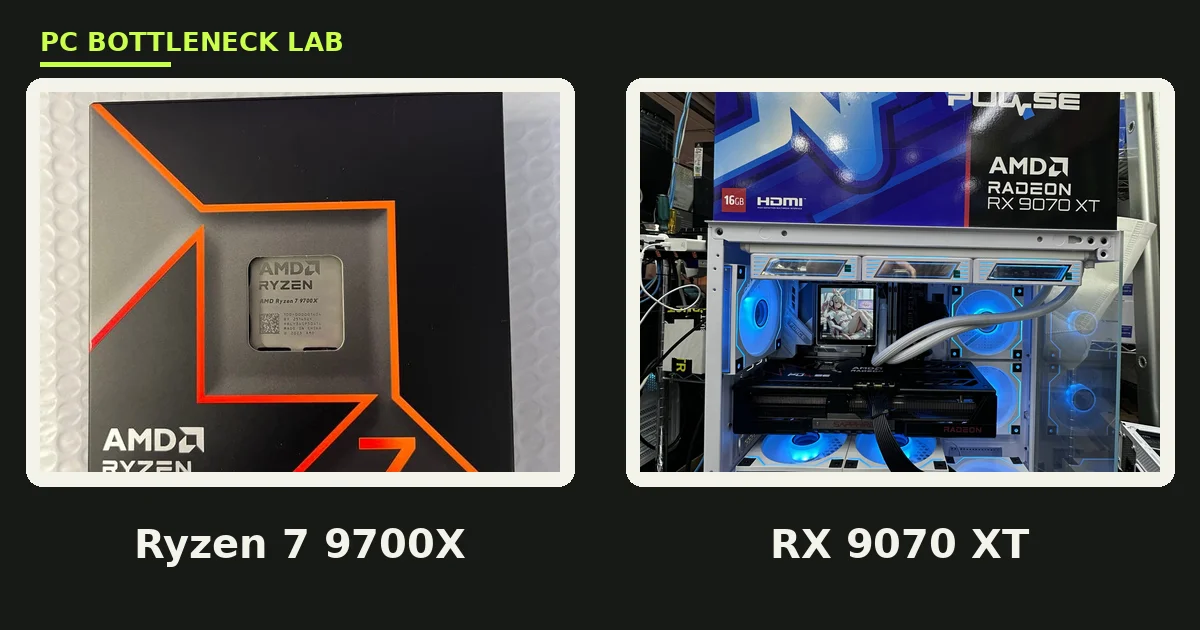
The RX 9070 XT is the best GPU for Ryzen 7 9700X gaming overall. It runs 4096 stream processors with 16GB of GDDR6 VRAM, and it draws 304W. The chip runs 8 cores and 16 threads, with a boost up to 5.5 GHz at only 65W. That balance suits 1440p high-refresh play and 4K alike. Check your own pair with the free tool: bottleneck calculator.
The chip is an efficient 8-core, so the GPU question is really about your resolution and your budget. At 1080p, the chip sets the ceiling in most games, because cards finish each frame fast. At 1440p, a strong mid-range card keeps pace in most titles. At 4K, the GPU works so hard on every frame that the chip rarely holds it back.
What the Ryzen 7 9700X brings
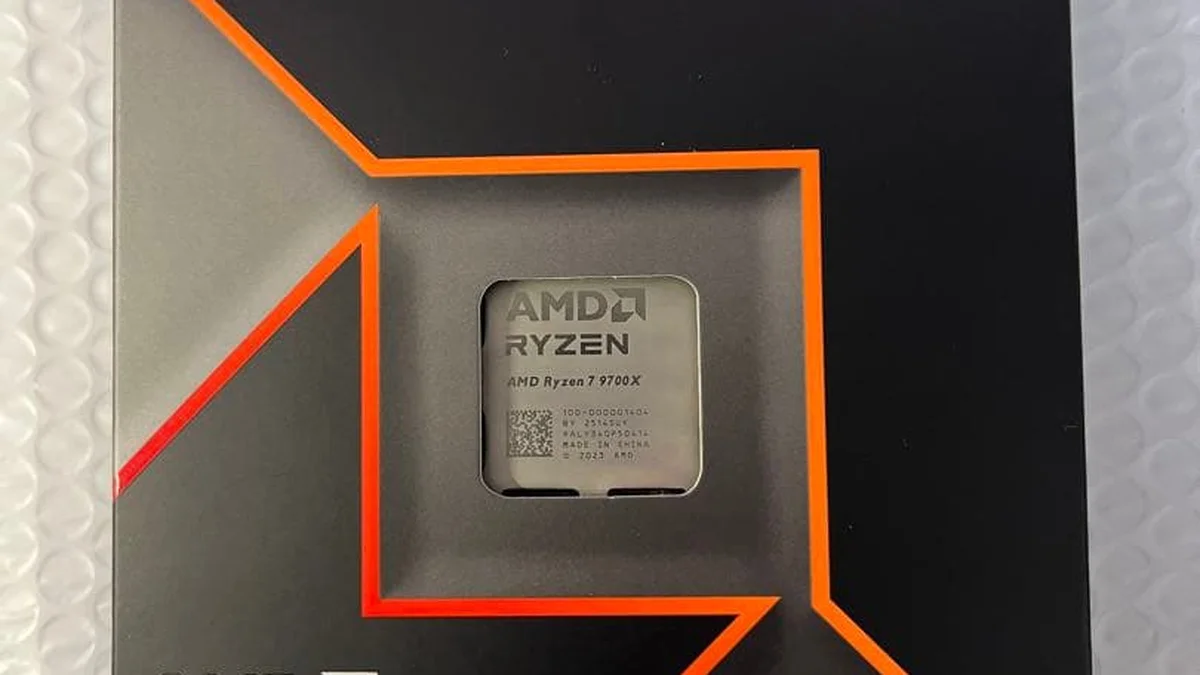
The Ryzen 7 9700X launched on August 8, 2024, at a $359 starting price. It runs 8 cores and 16 threads, with a boost up to 5.5 GHz and 32 MB of L3 cache. It draws only 65W, so it runs cool on a cheap air cooler. Zen 5 is the design behind the chip, and it sits on the AM5 platform with DDR5 RAM. For the full chip specs, see the Ryzen 7 9700X specifications page.
The chip's strength is balance, yet it has no big game cache, so it trails the X3D chips in CPU-bound games by a small margin. Yet it beats them in work like rendering and compiling, where clocks matter more than cache. It also costs less than the 9800X3D, so it leaves more money for the card. That trade suits builders who play and work on one PC.
| Spec | Ryzen 7 9700X | Ryzen 7 7800X3D | Ryzen 7 9800X3D |
|---|---|---|---|
| Cores / threads | 8 / 16 | 8 / 16 | 8 / 16 |
| Boost clock | 5.5 GHz | 5.0 GHz | 5.2 GHz |
| L3 cache | 32 MB | 96 MB | 96 MB |
| TDP | 65W | 120W | 120W |
| Platform | AM5, DDR5 | AM5, DDR5 | AM5, DDR5 |
| Launch | August 2024, $359 | April 2023, $449 | November 2024, $479 |
The 5 best GPUs for Ryzen 7 9700X
The table below ranks the five picks by their best use, not by price alone. The overall winner leads in value, while the other picks win on ray tracing, 4K play, or price. Read the notes under the table before you buy, since your monitor decides which pick fits you.
| Pick | GPU | VRAM | Power | Best for |
|---|---|---|---|---|
| 1. Overall | RX 9070 XT | 16GB GDDR6 | 304W | 1440p gaming overall |
| 2. Nvidia | RTX 5070 Ti | 16GB GDDR7 | 300W | Ray tracing and DLSS 4 |
| 3. 4K | RTX 5080 | 16GB GDDR7 | 360W | 4K high-refresh play |
| 4. Value | RTX 5070 | 12GB GDDR7 | 250W | 1440p on a mid budget |
| 5. Budget | RX 7800 XT | 16GB GDDR6 | 263W | 1440p on a tight budget |
1. RX 9070 XT — best overall
The RX 9070 XT is the best GPU for Ryzen 7 9700X gaming overall. It runs 4096 stream processors with 16GB of GDDR6 VRAM on a 256-bit bus. It launched at $599, and it beats the RTX 5070 Ti in raster play at 1440p. Buy it when you want the most frames per dollar at 1440p.
2. RTX 5070 Ti — best Nvidia pick
The RTX 5070 Ti is the best Nvidia pick for this chip. It runs 8960 CUDA cores with 16GB of GDDR7 VRAM, and it draws 300W. It launched at $749, and it leads in ray tracing and DLSS 4 frame generation. Buy it when ray tracing and Nvidia features matter more than raw value. For the exact pair with this chip, see this: Ryzen 7 9700X RX 9070 XT bottleneck.
3. RTX 5080 — best for 4K play
The RTX 5080 is the best pick for 4K high-refresh play. It runs 10752 CUDA cores with 16GB of GDDR7 VRAM, and it draws 360W. It launched at $999, and it is the fastest card this chip can feed without waste. Buy it when you play at 4K and want the top Nvidia card below the 5090.
4. RTX 5070 — best value Nvidia card
The RTX 5070 is the best value Nvidia card for this chip. It runs 6144 CUDA cores with 12GB of GDDR7 VRAM, and it draws 250W. It launched at $549, and it plays 1440p well in most games, so buy it when you want Nvidia features at a mid-range price.
5. RX 7800 XT — best budget pick
The RX 7800 XT is the cheapest card that still plays 1440p well with this chip. It runs 3840 stream processors with 16GB of GDDR6 VRAM, and it draws 263W. It launched at $499, and it now sells near $450–$550. Buy it when money is tight and you play at 1440p, not at 4K.
Best GPU for Ryzen 7 9700X by budget
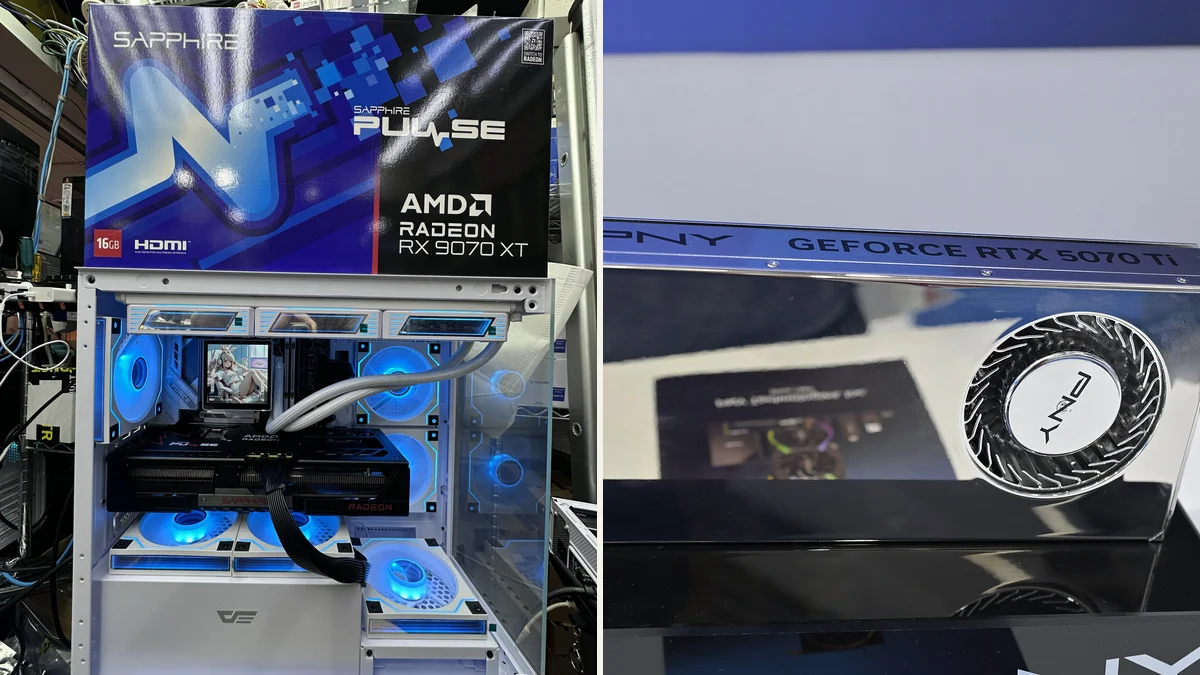
Your monitor decides which pick is cheapest for you, not the card price alone. A 1080p monitor wastes a 4K card, while a 4K monitor starves a budget card. The table below shows the real cost of each route, so you can match the pick to your screen.
| Budget | Pick | Best for | Power supply |
|---|---|---|---|
| Under $550 | RX 7800 XT | 1440p on a tight budget | 700W |
| Mid-range | RTX 5070 | 1440p with Nvidia features | 750W |
| Best value | RX 9070 XT | 1440p gaming overall | 750W |
| Ray tracing | RTX 5070 Ti | Ray tracing and DLSS 4 | 750W |
| No limit | RTX 5080 | 4K high-refresh play | 850W |
Street prices move fast in the November 2026 memory shortage, so check live prices before you buy (as of 17 Nov 2026). GPU prices sit above launch prices for most cards here, and that shifts the value order. The 9070 XT still wins on value when it costs clearly less than the 5070 Ti. For the 8-core rival chip, see this: best GPU for Ryzen 7 7800X3D.
Where the GPU matters: 1080p, 1440p and 4K
Resolution changes the balance between the chip and the card, and this chip shows it clearly. At 1080p, the chip draws each frame fast, so only the top cards use its full speed. A budget card still plays well here, yet the chip has power to spare. At 1440p, the balance shifts: the card takes longer per frame, so the mid-range picks catch up. At 4K, the card dominates, and even the budget tier plays well.
The higher the resolution, the more card you need. That rule also covers ray tracing, since ray tracing loads the GPU and gives the chip more breathing room. The 5070 Ti leads here, while the 9070 XT trails it in heavy ray tracing. Buy the Nvidia card when ray tracing is your top need. For the head-to-head on the two top chips, see this: Ryzen 7 9700X vs Ryzen 7 7800X3D bottleneck compared.
What to avoid with a Ryzen 7 9700X
Do not buy an RTX 5090 for this chip. The card costs far more than the chip, and it needs a faster CPU to show its full speed at 1080p and 1440p. At 4K it plays well, yet the money buys more frames elsewhere, while the 5080 is the ceiling for this chip.
Do not buy an 8GB card for a build you keep for years. The saving looks good on the receipt, yet new games already ask for more than 8GB at 1440p high settings. That shows up as hitching, not as a low average frame rate. Spend the extra money on a 16GB card, since it stays useful for years longer. For the low-usage pattern in full, see this: low GPU usage, low FPS.
The bottom line
The best GPU for Ryzen 7 9700X gaming is the RX 9070 XT. It feeds the chip fully at 1440p and costs less than the 5070 Ti. The 5070 Ti wins when ray tracing matters most, while the 7800 XT wins on a tight budget. At 4K, the 5080 is the ceiling for this chip. Check your pair first on the gpu bottleneck calculator before you spend, and buy the card your monitor actually needs.
Frequently asked questions
Can a 9700X feed a 9070 XT at 1440p high-refresh play without holding it back?
Yes, it can. The 9700X runs 8 cores with a boost up to 5.5 GHz, and that is plenty for a 9070 XT at 1440p. At 1440p the card takes longer per frame, so the chip keeps pace in most games. Only at 1080p competitive play does an X3D chip pull ahead, and even then the gap is small.
Is the RTX 5070 Ti wasted on a 9700X, or does the chip keep up with it?
No, it is not wasted. The chip feeds the 5070 Ti fully at 1440p and 4K in most games. The card's ray tracing and DLSS 4 features work just as well with this chip. The chip only looks slow at 1080p, where it sets the pace before the card can stretch. At 1440p and 4K, the pair is balanced.
My 9700X build has 16GB of RAM — will that limit a 9070 XT at 4K?
It can, in heavy games. The card has 16GB of VRAM, yet the system still needs RAM for the game and the operating system. New AAA games already ask for 16GB as a floor, so background apps can push you over it. Upgrade to 32GB when you play at 4K, since DDR5 kits cost less than a new card.
Ray tracing matters most to me — 9070 XT or 5070 Ti on my 9700X?
Pick the 5070 Ti when ray tracing is your top need. It leads the 9070 XT in heavy ray tracing, and DLSS 4 frame generation lifts smooth play further. Pick the 9070 XT when raster speed and price matter more, since it wins those in most games. Both cards play 1440p well, so your settings should decide it.
Does the 65W 9700X need a big cooler when paired with a 300W graphics card?
No, it does not. The chip draws only 65W, so a cheap tower air cooler keeps it cool in games. The card's 300W draw heats the case, not the chip, so add one good exhaust fan instead. A big liquid cooler buys you nothing here. Spend that money on RAM or storage.
Is a used RX 7800 XT still a fair match for a 9700X in late 2026?
Yes, it is still a fair match. The card runs 16GB of VRAM, and that suits 1440p well in most games. It trails the 9070 XT in new features, yet it costs far less. Buy it when the price gap is large, near $450–$550 (as of 17 Nov 2026). At the same price, the 9070 XT is the better buy.
How this guide was prepared
This guide uses the published specs of AMD and Nvidia, plus pricing from Tom's Hardware. Launch prices are launch prices, not street prices. The picks are this guide's own reading of those sources, and no frame rates were measured here.
Last updated: November 17, 2026