
Key takeaways
- A 32GB DDR5-6000 kit cost about 429 to 600 dollars in the US on November 3, 2026, against about 80 to 90 dollars in mid 2025.
- TrendForce forecasts DRAM contract prices up 10 to 15 percent in the fourth quarter of 2026, with NAND flash up 15 to 20 percent.
- The cheapest US RTX 5090 listed at 6,919 dollars on November 3, 2026, against a 1,999 dollar launch price.
- MSI board prices are set to rise further in November 2026, with the RTX 5080 up by as much as 1,200 dollars.
- No forecaster expects real price relief before late 2027, so December is a month to buy carefully, not to wait for a drop.
RAM GPU prices December 2026: the short answer
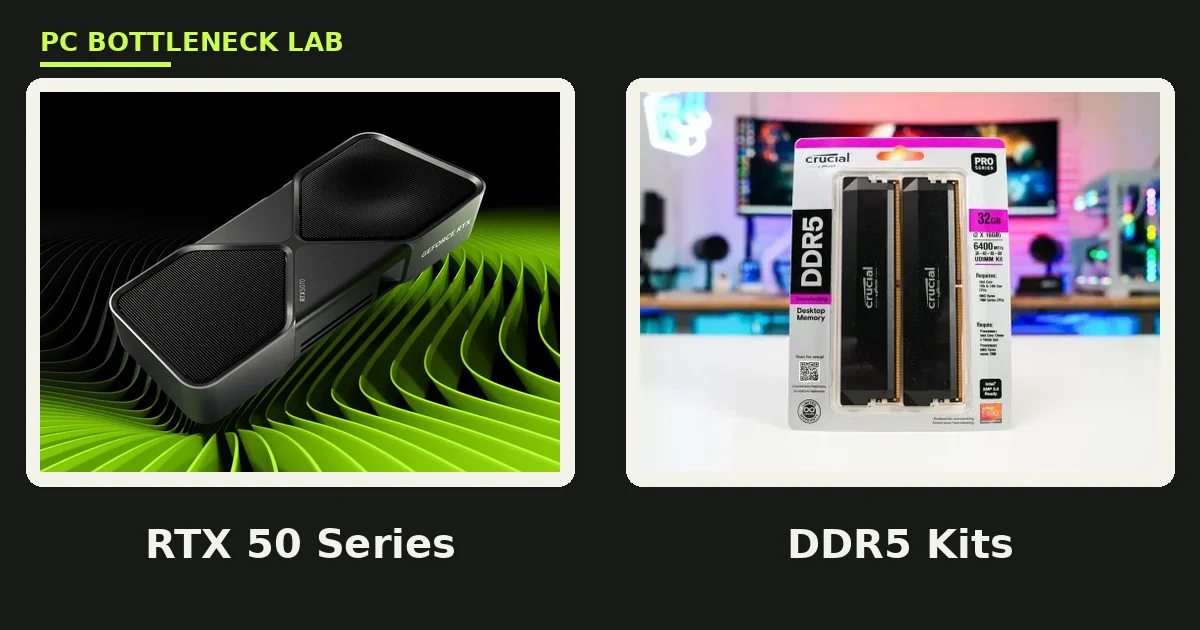
RAM and GPU prices December 2026 start from a November base that is already extreme. Memory is the bigger shock: a mainstream 32GB DDR5 kit now costs roughly four to five times its mid 2025 price. Graphics cards are the second shock: every current RTX 50 card lists well above its launch price. The December outlook is flat to up, because the fourth quarter forecast from TrendForce still points higher. For the November story in full, see this: GPU prices rising November 2026: buy before Black Friday. Check your own pair first with the free tool: bottleneck calculator.
| Part | Mid 2025 price | November 2026 price | Change |
|---|---|---|---|
| 32GB DDR5-6000 kit | About 80 to 90 dollars | About 429 to 600 dollars | Roughly 4 to 5 times |
| 64GB DDR5 kit | About 190 dollars | About 1,000 dollars or more | Roughly 5 times |
| RTX 5090 | 1,999 dollars launch | 6,919 dollars | About 3.5 times |
| RTX 5080 | 999 dollars launch | 1,999 dollars | About 2 times |
| RTX 5070 | 549 dollars launch | 899 dollars | About 1.6 times |
What RAM costs as December begins
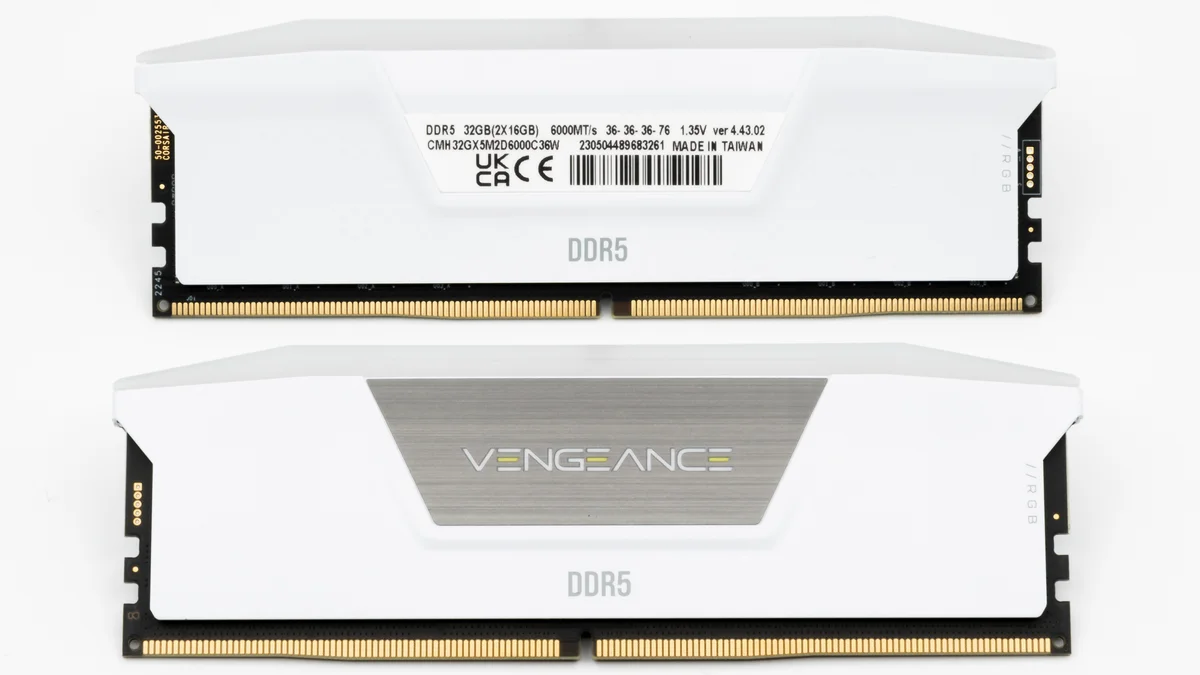
Memory is where the December 2026 market hurts most. A 32GB DDR5 kit cost about 429 to 600 dollars in the US as of November 3, 2026. That is about 13 to 19 dollars per gigabyte. The same size kit sold for about 80 to 90 dollars in mid 2025. A named example makes the gap concrete: a Corsair Vengeance 32GB DDR5-6000 CL30 kit listed at 559.99 dollars at Newegg on November 8, 2026. For the shortage story in full, see this: DDR5 RAM shortage: buy now or wait, November 2026.
The wholesale side tells the same story, and trendForce data showed a record price for a standard DDR4 8 gigabit chip in October 2026. The average fixed price hit 27.50 dollars, up 5.77 percent on September. Its fourth quarter 2026 forecast adds another 10 to 15 percent to DRAM contract prices. NAND flash rises 15 to 20 percent in the same forecast. Contract and shop prices do not move in lockstep, yet the direction has matched all year. Bigger kits hurt more. On one retail tracking chart, 64GB DDR5-6000 kits rose about 650 percent, and those kits now ship for 1,000 dollars or more.
What GPUs cost as December begins
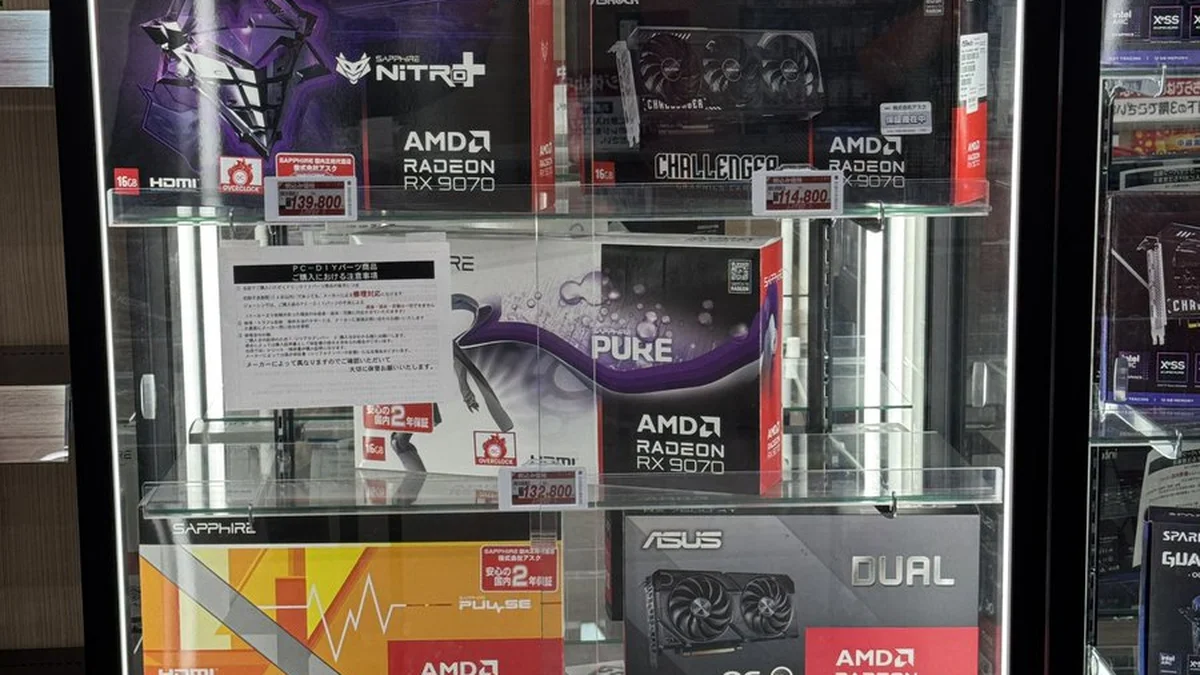
Graphics cards enter December at their highest levels of the year. The freshest public snapshot is the Tom's Hardware GPU price tracker, updated November 3, 2026. It records the lowest US price for each card, and every card sits above its launch price. The RTX 5090 leads the list at 6,919 dollars, more than three times its 1,999 dollar launch price. The RTX 5080 lists at 1,999 dollars, double its 999 dollar launch price. Mid range cards are no escape. The RTX 5070 lists at 899 dollars against a 549 dollar launch price. The RTX 5060 Ti 16GB lists at 769 dollars against 429 dollars.
TechSpot tracked the same climb across ten countries in its November 2, 2026 report. It found prices rose about 15 percent in August, 7 percent in September, and about 10 percent in October. That is roughly 35 percent in three months, and the rises are cumulative, so a card that looked dear in August looks worse now. Used cards have not saved buyers either, since the same shortage pushes second hand prices up. The 16GB RTX 5060 Ti carries the sharpest mid range premium, at about 79 percent above launch.
| Graphics card | Launch price | Lowest US price, Nov 3, 2026 | Above launch |
|---|---|---|---|
| RTX 5090 | 1,999 dollars | 6,919 dollars | About 246 percent |
| RTX 5080 | 999 dollars | 1,999 dollars | About 100 percent |
| RTX 5070 Ti | 749 dollars | 1,399 dollars | About 87 percent |
| RTX 5070 | 549 dollars | 899 dollars | About 64 percent |
| RTX 5060 Ti 16GB | 429 dollars | 769 dollars | About 79 percent |
| RTX 5060 Ti 8GB | 379 dollars | 499 dollars | About 32 percent |
Why prices keep rising
The cause is a memory shortage, not a single product launch. AI data centres buy high bandwidth memory, called HBM, faster than factories can make it. HBM shares fab lines with normal DRAM, so every wafer that goes to a server is a wafer that does not become DDR5 or GDDR7. TrendForce reported in September 2026 that DRAM supply will stay tight in 2027, and SK Hynix expects the shortage to last until at least 2030. That is why the price curve bends up across RAM, SSDs, and graphics cards at the same time.
Board partners are now passing their own cost rises to shops. A November 10, 2026 report on MSI, based on supply chain sources, lists planned rises of up to 1,200 dollars on the RTX 5080. The RTX 5070 Ti rises 120 to 600 dollars. The RTX 5070 rises 75 to 150 dollars. The RTX 5060 and 5060 Ti rise 30 to 75 dollars. Other board partners raised cost prices in early November too. Nothing new is coming to reset the market. The reported RTX 50 Super refresh is on hold, and no new card launch is on the horizon. For the VRAM side of the story, see this: VRAM vs system RAM explained.
What December could bring
December has no big sale window left to rescue buyers. Black Friday falls on November 27, 2026, and Cyber Monday on November 30, so December starts after the deals end. Adobe forecasts the deepest electronics discounts on Cyber Monday, not in December, and its 2026 forecast still expects record online spending. That means December demand stays strong while supply stays tight, and the honest December call is flat to up. The TrendForce fourth quarter forecast has not changed, and no forecaster on record expects a fall in 2026.
Relief has a date, and it is far away. Most new memory capacity lands in 2028 or later, with the first cleanroom from the August 2026 investment wave opening in December 2028. No published forecast has DDR5 prices falling in 2027. So a December buyer should plan around today's prices, not around a hoped for drop.
How to buy a balanced pair in December
Start with the pair, not the single part. A fast GPU with a weak CPU wastes money, and a strong CPU with a starved GPU does the same. Check the combination before you pay, using the free tool: CPU GPU bottleneck calculator. Then check the memory math: 16GB of RAM is the gaming minimum in 2026, and 32GB is the safer pick for new AAA games. For the size guide, see this: how much RAM do you need for gaming in 2026.
Buy the VRAM tier your resolution needs, and no higher. At 1080p, 8GB still works for esports and older games, while 12GB is safer for AAA titles. At 1440p, 12GB is the baseline and 16GB is the safer pick. At 4K, 16GB is the floor. Skip the flagship unless you play at 4K: the RTX 5090 premium buys little extra at 1440p. If a prebuilt looks cheap, read the full spec first. For the 16GB versus 32GB call, see this: 16GB vs 32GB RAM in 2026: the shortage.
The bottom line on RAM GPU prices December 2026
RAM GPU prices December 2026 are high, rising, and unlikely to fall soon. A 32GB DDR5 kit costs about four times its mid 2025 price, and the cheapest RTX 5090 costs more than three times its launch price. December has no sale window left and no new launch coming, so waiting buys you nothing. Buy the balanced pair you need now, size the VRAM to your resolution, and check the combination on the calculator before you spend.
Frequently asked questions
How much does 32GB of DDR5 RAM cost in December 2026?
About 429 to 600 dollars in the US, based on the November 3, 2026 tracker. A named Corsair Vengeance 32GB DDR5-6000 CL30 kit listed at 559.99 dollars at Newegg on November 8, 2026. That is about 13 to 19 dollars per gigabyte, against about 80 to 90 dollars for the whole kit in mid 2025. Prices vary by brand, speed, and shop, so check the live listing before you buy.
Will RAM prices fall in December 2026?
No forecaster on record expects a fall in December 2026. TrendForce forecasts DRAM contract prices up 10 to 15 percent in the fourth quarter of 2026, with NAND flash up 15 to 20 percent. SK Hynix expects the shortage to last until at least 2030, and most new capacity lands in 2028 or later. Waiting for a drop is a weak plan.
How much does an RTX 5070 cost in December 2026?
About 899 dollars for the cheapest US card, based on the Tom's Hardware tracker updated November 3, 2026. That is about 64 percent above its 549 dollar launch price. MSI board prices are set to rise further, with the RTX 5070 up by 75 to 150 dollars in November 2026. The price moves daily as stock sells through, so treat 899 dollars as a snapshot, not a fixed price.
Why are GPU prices so high in late 2026?
A memory shortage is the main cause, and aI data centres buy high bandwidth memory faster than factories can make it. That memory shares fab lines with the DDR5 and GDDR7 used in PCs. Board partners then raised their own cost prices in November 2026, with MSI rises of up to 1,200 dollars on the RTX 5080. No new launch is coming, so the shortage sets the price.
Is Christmas 2026 a good time to buy a GPU?
Yes, if you need one now and the pair is balanced. No forecaster expects prices to fall in December, and the TrendForce fourth quarter forecast still points up. December has no big sale window left, since Black Friday and Cyber Monday fall in late November. Buy the VRAM tier your resolution needs, check the CPU and GPU combination first, and skip the flagship unless you play at 4K.
Is 16GB of RAM still enough for gaming in December 2026?
Yes, 16GB is still the gaming minimum in 2026, and it works for most titles at 1080p and 1440p. But 32GB is the safer pick for new AAA games and simulators. The catch is price: 32GB kits cost about four times their mid 2025 price. If your budget is tight, 16GB now plus a later upgrade is a fair compromise.
How this guide was prepared
This guide uses the TrendForce fourth quarter 2026 forecast, the Capital and Compute DDR5 tracker, and the Tom's Hardware GPU tracker. The last two were updated November 3, 2026. The TechSpot report of November 2 and the Wccftech MSI report of November 10 complete the set. Every price is a dated reported snapshot, not a live quote, and prices move daily.
Last updated: November 12, 2026