
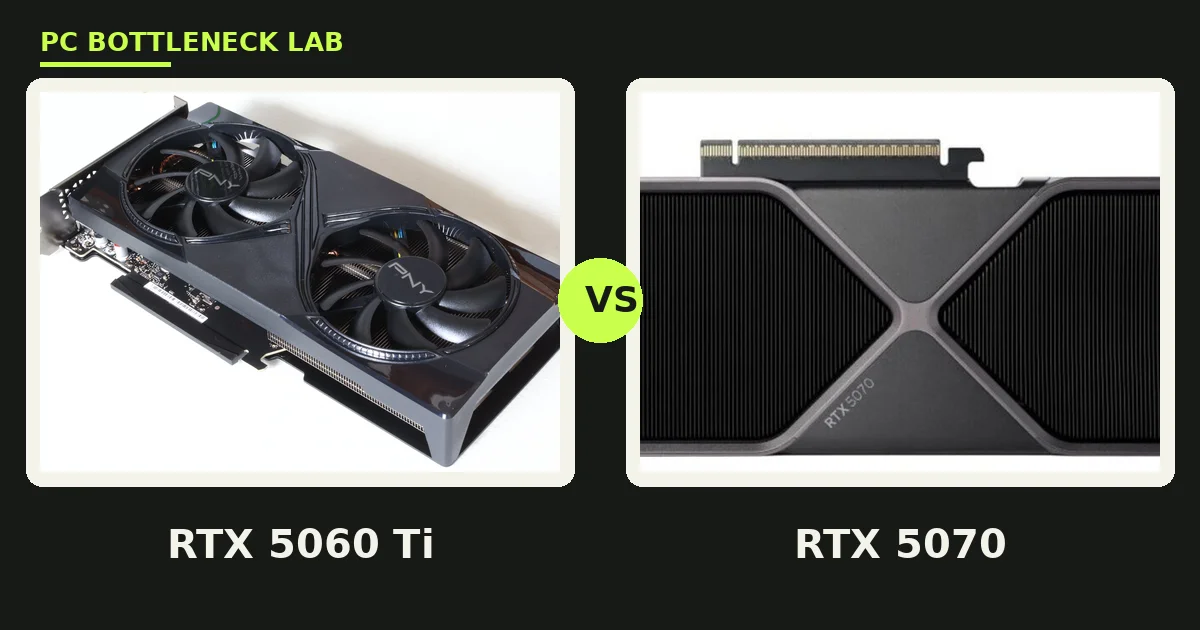
Key takeaways
- The RTX 5070 is about 31% faster at 1440p in Tom’s Hardware June 2026 averages, and ComputerBase measured 36%.
- The RTX 5060 Ti 16GB has 16GB of VRAM against 12GB on the 5070, so it suits texture-heavy games better.
- The 5070 has a third more CUDA cores and 50% more memory bandwidth than the 5060 Ti.
- At 1440p the GPU sets the limit, so a six-core CPU feeds either card in most games.
- The launch gap was 120 dollars: 429 dollars for the 5060 Ti 16GB, and 549 dollars for the 5070.
RTX 5060 Ti vs RTX 5070: the short answer
For the RTX 5060 Ti vs RTX 5070 bottleneck, the 5070 is faster, and the 5060 Ti 16GB holds more memory. Tom’s Hardware puts the 5070 about 31% ahead at 1440p, and about 26% ahead at 1080p. The 5060 Ti answers with 16GB of VRAM, a 180 W draw, and a lower launch price. For the tier below, see this: RTX 4060 vs RTX 5060 bottleneck compared. Check your own pair with the free tool: bottleneck calculator.
| Question | RTX 5060 Ti 16GB | RTX 5070 |
|---|---|---|
| Faster card | No | Yes, about 31% at 1440p |
| More VRAM | Yes, 16GB | No, 12GB |
| Lower power | Yes, 180 W | No, 250 W |
| Lower launch price | Yes, 429 dollars | No, 549 dollars |
| Best for | Texture-heavy 1440p | High-refresh 1440p |
RTX 5060 Ti vs RTX 5070 specs compared
A bottleneck is the part that finishes its work last, and it sets the frame rate. Both cards are Blackwell cards from 2025, and both support DLSS 4 with Multi Frame Generation. The split is simple: the 5070 has more cores and bandwidth, while the 5060 Ti has more memory on a narrower bus.
The 5070 has 6,144 CUDA cores against 4,608 on the 5060 Ti, which is a third more. Its 192-bit bus gives 672 GB/s of bandwidth, against 448 GB/s on the 128-bit bus of the 5060 Ti. That is 50% more bandwidth, and it shows in demanding games.
| Spec | RTX 5060 Ti 16GB | RTX 5070 |
|---|---|---|
| Architecture | Blackwell, GB206 | Blackwell, GB205 |
| CUDA cores | 4,608 | 6,144 |
| VRAM | 16GB GDDR7 | 12GB GDDR7 |
| Memory bus | 128-bit | 192-bit |
| Bandwidth | 448 GB/s | 672 GB/s |
| Power draw | 180 W | 250 W |
| System power | 600 W, per NVIDIA | 650 W, per NVIDIA |
| PCIe lanes | x8 | x16 |
| Launch | 16 April 2025, 429 dollars | 5 March 2025, 549 dollars |
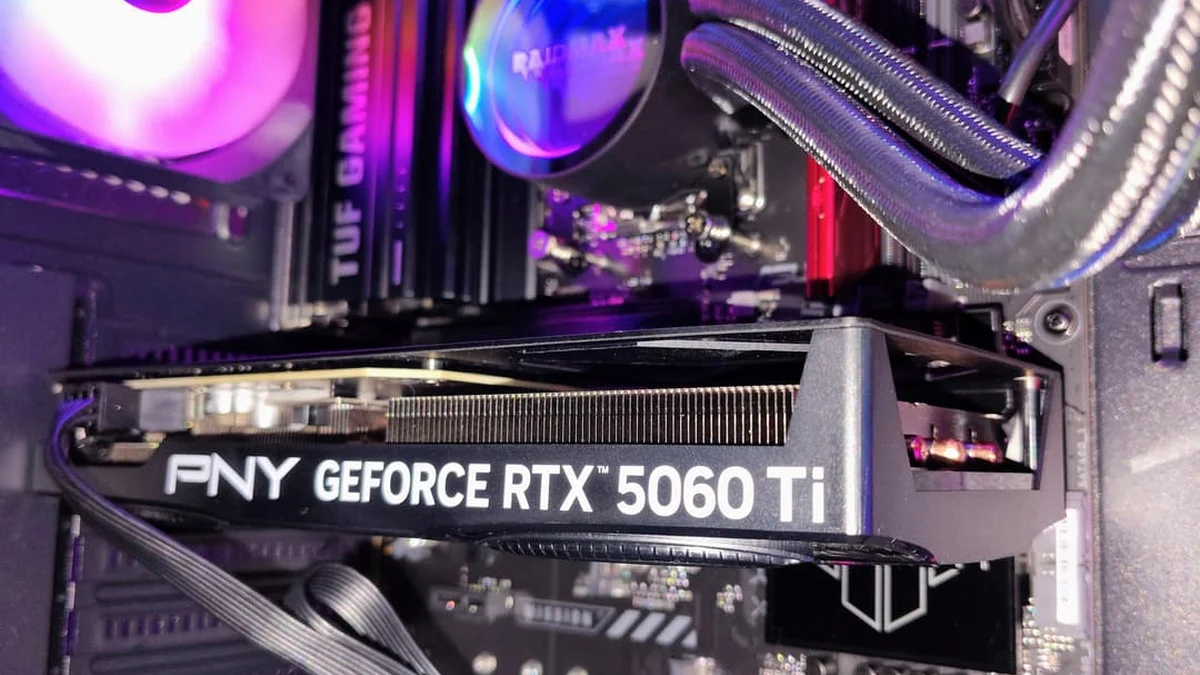
How much faster is the RTX 5070?
The gap depends on the resolution and the test, so treat every figure as a named estimate. Tom’s Hardware June 2026 averages put the 5070 about 26% ahead at 1080p, about 31% ahead at 1440p, and about 35% ahead at 4K. With ray tracing at 1440p, the lead was about 32%. ComputerBase measured a 36% lead at 1440p in 2025.
That range, roughly 26% to 36% at 1440p, is the honest answer. The gap is smallest at 1080p, where the CPU can limit both cards, and it grows at 4K, where bandwidth matters more. In ray-traced games the extra RT cores of the 5070 pull further ahead. Use these figures as estimates from named sources, not as our own tests.
VRAM: 16GB against 12GB
VRAM is the memory on the graphics card, and it holds textures, models, and frame data. When it fills up, the driver spills data to system RAM, and that spill causes stutter. The 5060 Ti has 16GB, so it holds larger texture packs without spilling. The 5070 has 12GB, which is enough for most games today, yet it is closer to the edge.
This is the one place where the cheaper card wins. Texture-heavy games with ultra packs can exceed 12GB at 1440p, and there the 5060 Ti stays smooth while the 5070 stutters. For the full VRAM story, see this: VRAM bottleneck: 8GB vs 12GB vs 16GB.
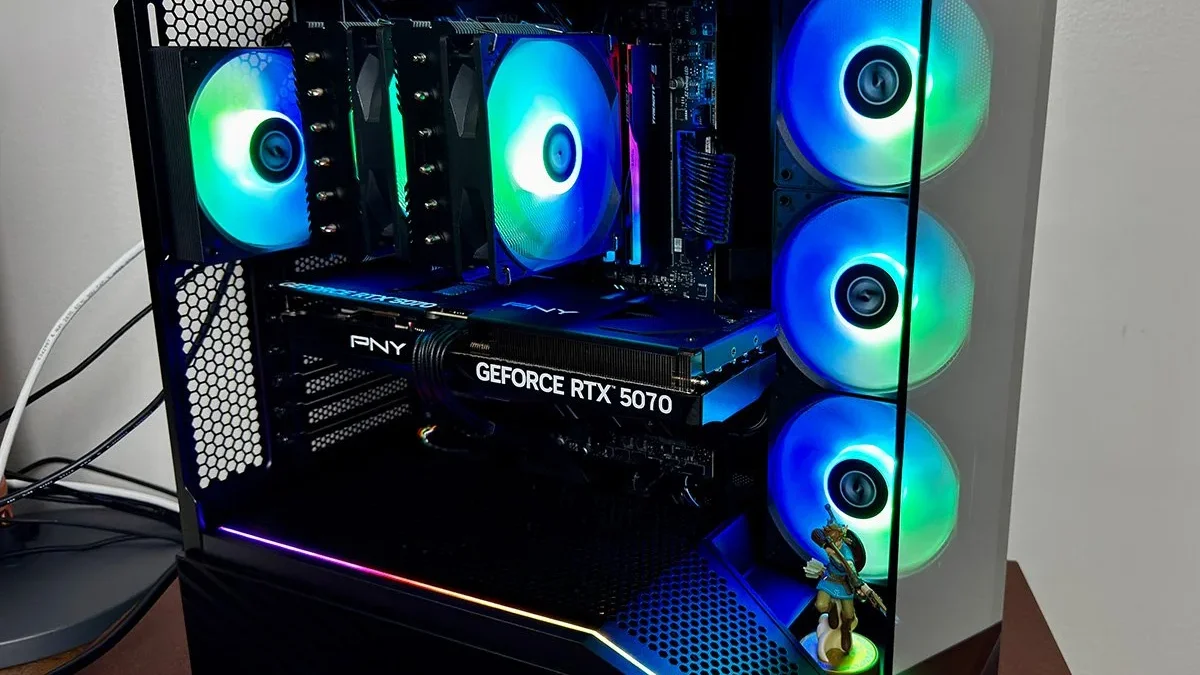
RTX 5060 Ti vs RTX 5070 Bottleneck: CPU Needs
A CPU bottleneck is when the processor finishes last, and it caps the frame rate. At 1440p the GPU sets the limit for both cards, so a modern six-core CPU feeds either one in most games. A Ryzen 5 7600 or Core i5-12400F is enough there, and a faster chip adds little.
At 1080p high refresh the picture changes. The faster 5070 finishes frames sooner, so the CPU matters more, and a stronger chip shows a real gain. The 5060 Ti is less demanding there, so a six-core chip is enough. For the CPU picks for the cheaper card, see this: best CPU for RTX 5060 and 5060 Ti.
The 5070 also needs a stronger power supply. NVIDIA lists 650 W for the 5070, against 600 W for the 5060 Ti. The 5070 uses a 16-pin connector on most models, while the 5060 Ti uses a single 8-pin. Check your case length too, since partner 5070 cards run longer.
RTX 5060 Ti vs RTX 5070 Bottleneck by Resolution
Resolution decides which part sets the limit, and it changes the gap between these cards. At 1080p the cards finish frames fast, so the CPU carries more of the work. The 5070 lead is about 26% there in Tom’s Hardware averages, and a slower CPU can shrink it further. A six-core chip is enough, yet a faster chip shows more of the gap.
At 1440p the GPU takes over, and the gap grows to about 31%. The cards draw far more pixels, so the CPU waits on them instead. This is the resolution where the comparison matters most, since both cards are built for it. A six-core CPU feeds either card here in most games.
At 4K the gap grows again, to about 35% in the same averages. Bandwidth matters more as the pixel count rises, and the 192-bit bus of the 5070 pulls ahead. The 5060 Ti still plays at 4K in many games, yet it needs lower settings or DLSS to stay smooth. Pick your resolution first, then pick the card.
Ray tracing shifts the balance further. The 5070 lead was about 32% at 1440p with ray tracing in the same averages, since its extra RT cores carry more of the load. The 5060 Ti can still play ray-traced games, yet it leans harder on DLSS to hold the frame rate.
Value: is the 5070 worth 120 dollars more?
The launch gap was 120 dollars, which is 28% more for the 5070. The speed gain at 1440p is about 31% in Tom’s Hardware averages, so the extra money buys a roughly equal gain in speed. That makes the 5070 fair value at launch prices, yet street prices change the math.
Use a simple rule at the shop. If the street gap is near the launch gap, buy the 5070 for 1440p high refresh. If the gap grows far past 120 dollars, the 5060 Ti wins on value. If texture-heavy games are your main diet, the 16GB card wins even at equal prices. For the tier above, see this: RTX 4070 vs RTX 5070 bottleneck compared.
Which card should you buy?
Buy the RTX 5070 if you play at 1440p high refresh and want the fastest card in this tier. Buy the RTX 5060 Ti 16GB if you play texture-heavy games, run a smaller power supply, or want the most VRAM for the money. Both cards support the same DLSS 4 features, so the choice is speed against memory.
For the CPU side of the cheaper card, see this: RTX 5060 Ti CPU bottleneck: which CPU you need. Then check your exact pair before you buy, since your CPU and resolution decide how much of the gap you will see.
The bottom line on RTX 5060 Ti vs RTX 5070
The RTX 5060 Ti vs RTX 5070 bottleneck ends with speed on the 5070 side, by an estimated 26% to 36% at 1440p. The RTX 5060 Ti 16GB is the better memory card. Speed favours the 5070, VRAM favours the 5060 Ti, and value depends on the street gap. Check your pair first on the cpu gpu bottleneck calculator before you spend on new parts.
Frequently asked questions
Is the RTX 5070 much faster than the RTX 5060 Ti?
Yes, by an estimated 26% to 36% at 1440p. Tom’s Hardware June 2026 averages put the 5070 about 31% ahead at 1440p, and ComputerBase measured 36%. The gap is about 26% at 1080p and about 35% at 4K. These are the named sources’ figures, not our own tests, and the gap varies by game.
Does the RTX 5060 Ti 16GB beat the RTX 5070 in any game?
Yes, in texture-heavy games where 12GB of VRAM runs out. The 5060 Ti has 16GB of VRAM against 12GB on the 5070, so it holds larger texture packs without spilling to system RAM. When the 5070 spills, it stutters, and the 5060 Ti stays smooth. In most other games the 5070 is faster.
Which of the two cards suits 1440p gaming best?
The RTX 5070 is better for 1440p high refresh, since it is about 31% faster in Tom’s Hardware averages. The RTX 5060 Ti 16GB is better for texture-heavy games at 1440p, since its 16GB of VRAM avoids stutter. Pick the 5070 for speed, and the 5060 Ti for memory headroom and lower power.
How strong a CPU does an RTX 5070 need at 1440p?
A modern six-core CPU is enough at 1440p, since the GPU sets the limit there. A Ryzen 5 7600 or Core i5-12400F feeds the 5070 well in most games. At 1080p high refresh, a faster chip shows a real gain, since the CPU matters more. A Ryzen 7 9800X3D is the top pick for high-refresh play.
Is 12GB of VRAM enough in 2026?
Yes, for most games at 1080p and 1440p, but it is closer to the edge than 16GB. Most current games fit in 12GB at high settings, yet ultra texture packs can exceed it. The 5070 handles today’s games well, while the 5060 Ti 16GB has more room for future texture-heavy titles.
Which power supply wattage fits the RTX 5060 Ti and 5070?
A 600 W unit fits the RTX 5060 Ti, and a 650 W unit fits the RTX 5070. The 5060 Ti draws 180 W, and NVIDIA lists a 600 W system power for it. The 5070 draws 250 W, and NVIDIA lists 650 W. The 5060 Ti uses a single 8-pin connector, while the 5070 uses a 16-pin connector. Check your unit before you buy either card.
How this guide was prepared
This comparison uses the published specs of NVIDIA, the Tom’s Hardware June 2026 GPU hierarchy averages, and the ComputerBase 2025 test suite. The performance gaps are the named sources’ figures, labelled as estimates, not our own tests. The prices shown are the makers’ launch figures.
Last updated: November 14, 2026